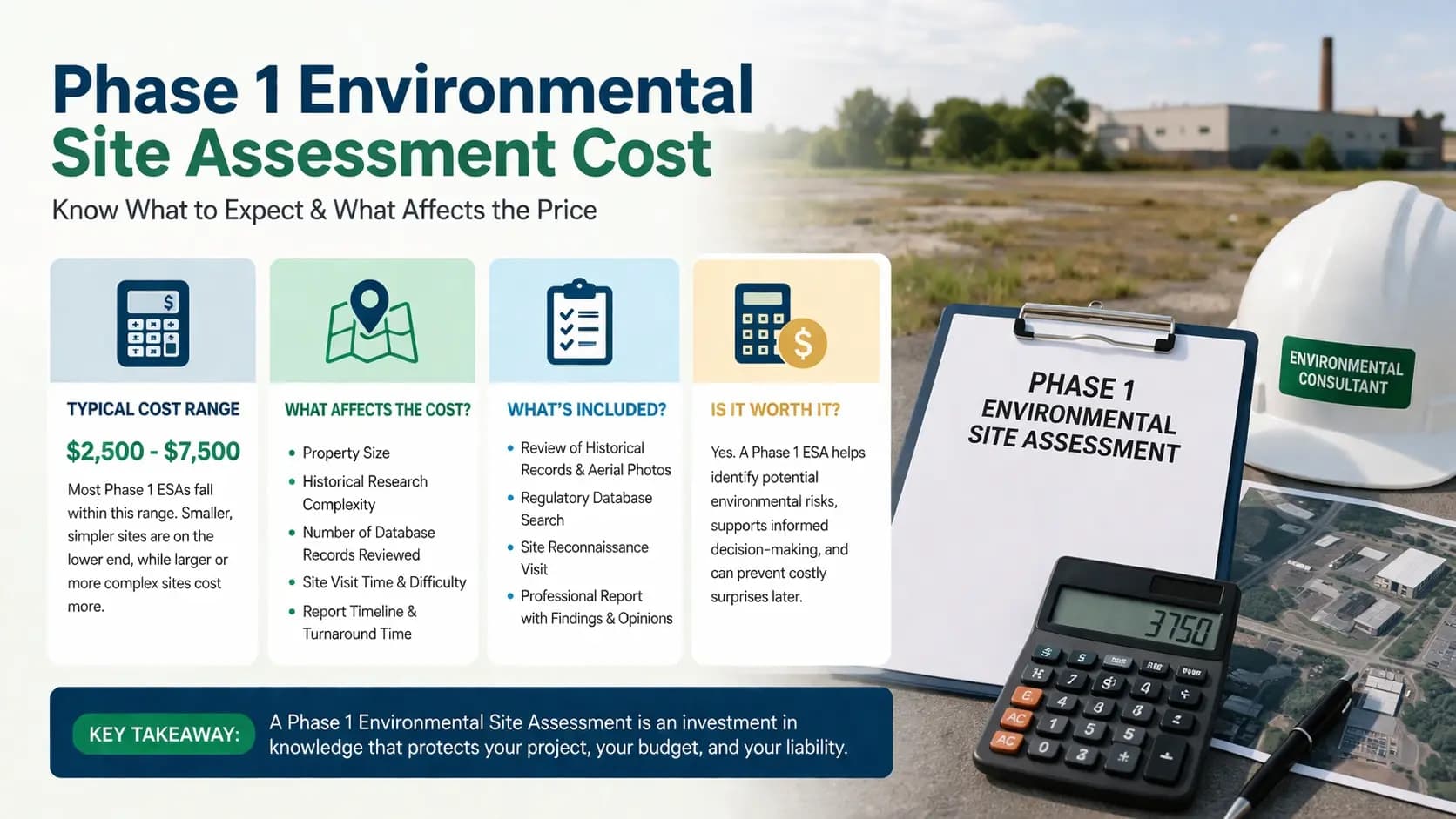
Learn what influences Phase 1 Environmental Site Assessment cost, typical pricing ranges, key factors, and tips to save money while ensuring compliance.
Introduction
When purchasing or developing a property, understanding environmental risks is not just a precautionit’s a necessity. A Phase 1 Environmental Site Assessment (ESA) is often the first and most critical step in evaluating potential contamination risks associated with a property. Whether you are a real estate investor, developer, lender, or business owner, understanding the cost of a Phase 1 ESA can help you budget effectively and avoid unexpected liabilities.
In this comprehensive guide, we’ll explore what a Phase 1 Environmental Site Assessment is, the factors that influence its cost, typical pricing ranges, and how you can optimize your investment while ensuring compliance with environmental regulations.
What Is a Phase 1 Environmental Site Assessment?
A Phase 1 Environmental Site Assessment is a standardized process used to identify potential or existing environmental contamination liabilities on a property. It follows guidelines set by ASTM International (specifically ASTM E1527-21) and is often required by lenders before financing a commercial real estate transaction.
Key Objectives of a Phase 1 ESA
- Identify Recognized Environmental Conditions (RECs)
- Evaluate historical land use
- Assess potential contamination risks
- Protect buyers from liability under environmental laws
What Does It Include?
A typical Phase 1 ESA involves:
- Site inspection: A physical walkthrough of the property
- Historical records review: Examining past ownership and land use
- Regulatory database search: Checking for nearby contamination cases
- Interviews: Speaking with owners, occupants, or local authorities
- Report preparation: Documenting findings and recommendations
Average Cost of a Phase 1 Environmental Site Assessment
The cost of a Phase 1 ESA can vary significantly depending on several factors. However, here are general pricing ranges:
- Small properties (e.g., retail or small office): $1,500 – $3,000
- Medium properties (e.g., warehouses, larger offices): $2,500 – $5,000
- Large or complex sites (e.g., industrial facilities): $4,000 – $10,000+
Typical Cost Range
Most standard Phase 1 ESAs fall between $2,000 and $4,000.
Factors That Influence Phase 1 ESA Cost
Several variables can impact the final price of a Phase 1 Environmental Site Assessment. Understanding these factors can help you anticipate costs and plan accordingly.
1. Property Size
Larger properties require more time for inspection and analysis, which increases the overall cost.
Example:
- A small retail shop may cost $2,000
- A 50-acre industrial site could exceed $8,000
2. Property Type
Different types of properties carry different levels of risk.
- Low-risk properties: Residential, offices
- Moderate-risk: Commercial retail spaces
- High-risk: Gas stations, factories, dry cleaners
Higher risk properties typically require more detailed investigation.
3. Location
Costs can vary depending on geographic location due to:
- Local labor rates
- Accessibility of the site
- Availability of historical data
Urban areas may have higher costs but better access to records, while rural areas might require additional research time.
4. Historical Complexity
Properties with a long or complicated history may require extensive research.
Factors include:
- Multiple past owners
- Previous industrial use
- Known contamination issues nearby
5. Turnaround Time
If you need a report quickly, you may have to pay a premium.
- Standard delivery: 2–3 weeks
- Rush service: Additional 10–30% cost
6. Consultant Experience
Highly experienced environmental consultants may charge higher fees, but they often provide more reliable and thorough assessments.
Breakdown of Costs
Here’s how the total cost is typically distributed:
Site Inspection
- Travel expenses
- Time spent on-site
Records Review
- Historical maps
- Aerial photographs
- Title records
Regulatory Database Search
- Federal and state environmental databases
- Local agency records
Report Preparation
- Data analysis
- Documentation
- Final report writing
Why Is a Phase 1 ESA Worth the Cost?
Although the upfront cost may seem significant, a Phase 1 ESA can save you thousandsor even millionsof dollars in the long run.
Key Benefits
- Liability protection: Qualifies for “innocent landowner” defense
- Informed decision-making: Helps you understand environmental risks
- Negotiation leverage: Can be used to renegotiate property price
- Regulatory compliance: Meets lender and legal requirements
What Happens After a Phase 1 ESA?
If the assessment identifies potential contamination (RECs), further investigation may be required.
Phase 2 Environmental Site Assessment
- Soil and groundwater testing
- Laboratory analysis
- Higher costs ($5,000 – $50,000+)
Not all Phase 1 ESAs lead to Phase 2, but it’s important to be prepared.
Tips to Reduce Phase 1 ESA Costs
While you cannot eliminate the cost entirely, you can take steps to manage and reduce expenses.
1. Choose the Right Consultant
- Compare multiple quotes
- Check credentials and experience
- Avoid choosing solely based on the lowest price
2. Provide Complete Information
Supplying accurate and detailed property information can reduce research time and cost.
3. Plan Ahead
Avoid rush fees by scheduling the assessment early in your transaction process.
4. Bundle Services
Some firms offer discounts if you bundle Phase 1 ESA with other environmental services.
5. Understand Your Needs
Not all properties require extensive assessments. Ensure you’re not overpaying for unnecessary services.
Common Mistakes to Avoid
Underestimating Importance
Skipping a Phase 1 ESA can expose you to significant legal and financial risks.
Choosing Inexperienced Consultants
Low-cost providers may miss critical issues, leading to costly consequences later.
Ignoring Recommendations
If the report suggests further investigation, take it seriously.
Real-World Example
Imagine purchasing a commercial property for $500,000. You decide to skip the Phase 1 ESA to save $3,000. Later, contamination is discovered, requiring $100,000 in cleanup costs.
In this scenario, the small upfront savings resulted in a massive financial burden.
How to Select a Reliable ESA Provider
When choosing a consultant, consider the following:
- Certifications and qualifications
- Experience with similar properties
- Turnaround time
- Client reviews and testimonials
Questions to Ask
- What is included in the cost?
- How long will the assessment take?
- Do you follow ASTM standards?
Future Trends in ESA Costs
As environmental regulations become stricter, the demand for Phase 1 ESAs is increasing. This may influence pricing trends.
Emerging Factors
- Advanced data analysis tools
- Increased regulatory scrutiny
- Greater emphasis on sustainability
These trends may lead to higher costs but also more accurate assessments.
Conclusion
The cost of a Phase 1 Environmental Site Assessment is a small price to pay for the peace of mind and protection it provides. Typically ranging between $2,000 and $4,000, the investment can help you avoid significant environmental liabilities and make informed real estate decisions.
By understanding the factors that influence cost and taking proactive steps to manage expenses, you can ensure a smooth and cost-effective assessment process. Whether you’re buying, selling, or financing property, a Phase 1 ESA is an essential tool for safeguarding your investment.
Final Thoughts
Think of a Phase 1 ESA not as an expense, but as a strategic investment. It protects your financial interests, ensures compliance, and provides clarity in complex real estate transactions.
If you’re planning a property purchase, make sure to include this critical step in your due diligence process.