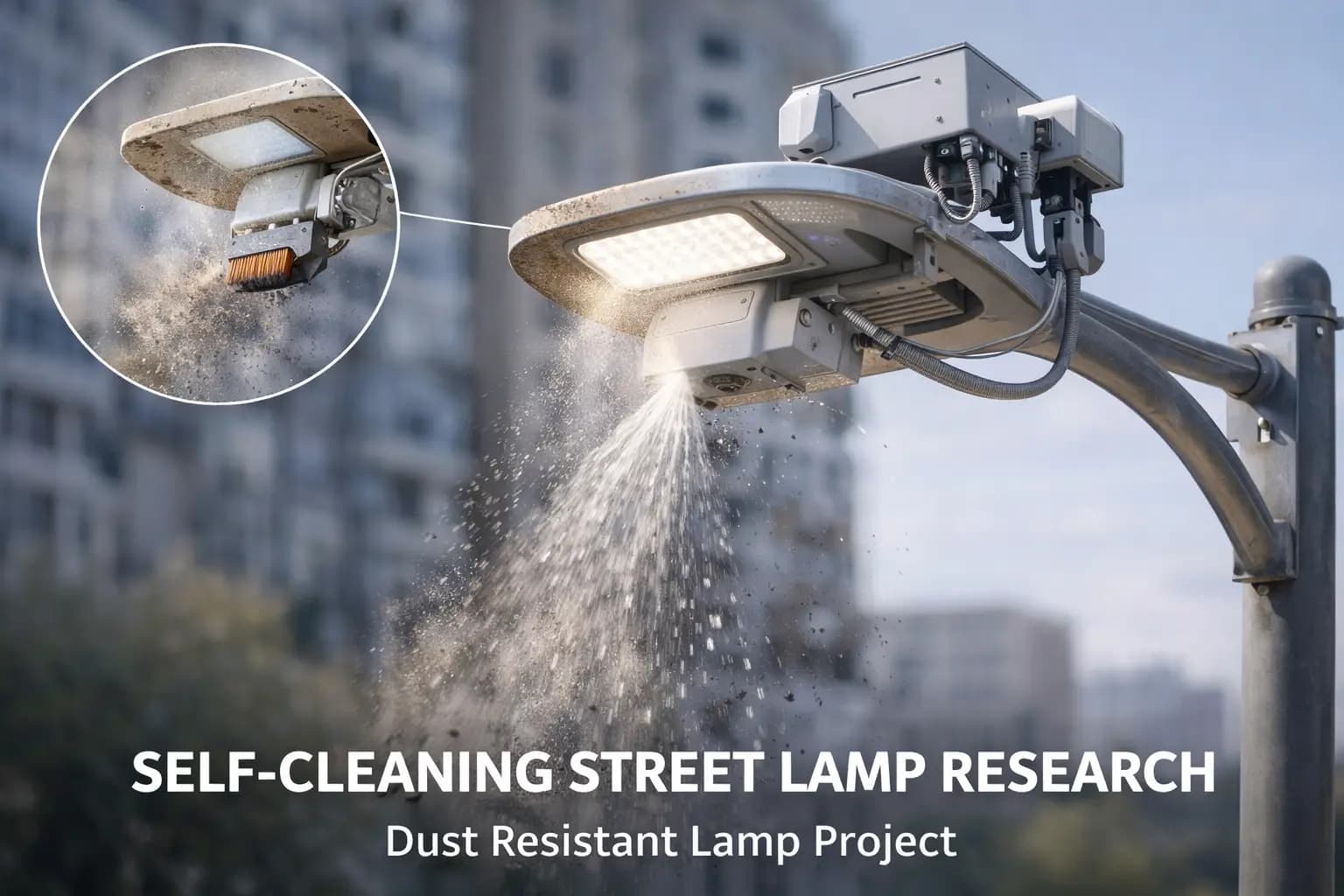
Explore self-cleaning street lamp research, dust-resistant lamp technologies, and whether such projects already exist, including design methods and trends.
Introduction
Street lighting is a critical part of modern infrastructure, improving road safety, pedestrian visibility, urban aesthetics, and public security. However, one of the most overlooked challenges in street lighting systems is maintenanceparticularly the accumulation of dust, dirt, pollution, bird droppings, and environmental debris on lamp surfaces. Over time, this contamination reduces light output, lowers efficiency, increases maintenance costs, and shortens equipment lifespan.
This challenge has sparked growing interest in self-cleaning street lamp research and dust-resistant lamp projects. Municipalities, smart city developers, and engineering researchers are actively exploring technologies that reduce the need for manual cleaning while improving lamp performance in dusty or polluted environments.
The key question many innovators ask is: Do self-cleaning dust-resistant street lamp projects already exist? The answer is yesbut the technology is still evolving, with many prototypes, patents, and commercial implementations emerging globally.
This article explores existing research, technologies, practical design approaches, benefits, challenges, and future trends related to self-cleaning and dust-resistant street lamps.
Why Dust and Dirt Are a Serious Problem for Street Lamps
Street lamps are continuously exposed to harsh outdoor conditions. Over time, contaminants accumulate on the lamp housing and protective lens, reducing brightness and efficiency.
Common Sources of Contamination
- Road dust and sand
- Industrial pollution
- Vehicle exhaust particles
- Bird droppings
- Rainwater residue and mineral buildup
- Insects and spider webs
- Tree pollen and organic debris
Impact on Street Lamp Performance
Dust buildup can cause:
- Reduced illumination output by blocking light transmission
- Higher energy waste because lamps appear dimmer
- Frequent maintenance costs due to cleaning requirements
- Thermal issues from blocked ventilation
- Shorter lamp lifespan due to overheating and contamination
In desert regions, industrial zones, and high-traffic urban areas, dust accumulation becomes even more severe.
Do Self-Cleaning Street Lamp Projects Already Exist?
Yesmultiple research initiatives and real-world projects already exist.
Existing Forms of Self-Cleaning Street Lamp Technology
Hydrophobic Nano-Coatings
- Special coatings repel water and dust.
- Rainwater naturally washes debris away.
Electrostatic Dust Repulsion Systems
- Electrified surfaces repel charged dust particles.
- Common in solar panel cleaning research.
Mechanical Wiper Systems
- Miniature automated wipers clean lamp covers periodically.
Compressed Air Cleaning Mechanisms
- Air bursts remove surface dust.
Vibration-Based Cleaning
- Ultrasonic or vibration motors shake dust loose.
Rotating Protective Covers
- Transparent rotating covers clean themselves through movement.
These systems have been studied in academic research, patents, and smart city pilot projects.
Key Technologies Used in Self-Cleaning Street Lamps
Hydrophobic and Oleophobic Coatings
Hydrophobic coatings cause water to bead and roll off surfaces, carrying dust and dirt with it.
Benefits
- Passive cleaning mechanism
- No moving parts required
- Low maintenance
- Cost-effective after installation
Common Materials
- Titanium dioxide coatings
- Silica nanoparticle coatings
- Fluoropolymer coatings
- Ceramic nano-layers
Limitations
- Less effective in dry climates with little rain
- Coatings degrade over time
- May require reapplication every few years
Electrostatic Dust Removal Systems
Electrostatic cleaning uses electric fields to repel or move dust particles from lamp surfaces.
How It Works
- Transparent electrodes are embedded near the lamp cover.
- A voltage creates an oscillating electric field.
- Dust particles are displaced and removed.
Advantages
- Works without water
- Effective in dry environments
- Minimal mechanical wear
Challenges
- Higher implementation cost
- Requires electrical control circuitry
- Best for fine dust, less effective for sticky debris
Mechanical Self-Cleaning Designs
Mechanical cleaning systems physically remove dust using moving components.
Common Methods
Micro Wipers
Small wipers sweep lamp lenses at scheduled intervals.
Rotating Brushes
Brush systems rotate around the lamp cover.
Air Blowers
Fans or compressed air jets blast away dust.
Benefits
- Highly effective in heavy dust conditions
- Works regardless of weather
Drawbacks
- Moving parts wear out
- More maintenance required
- Higher mechanical complexity
Smart Sensor Integration in Modern Dust-Resistant Lamp Projects
Many advanced prototypes include sensors that automate cleaning based on real-time conditions.
Sensor Types Used
- Dust accumulation sensors
- Light output degradation sensors
- Rain sensors
- Temperature sensors
- Air quality sensors
Smart Automation Features
- Trigger cleaning only when needed
- Monitor maintenance status remotely
- Integrate with smart city systems
- Predict maintenance schedules using analytics
Research Areas in Self-Cleaning Street Lamp Development
Researchers continue exploring improvements in:
Material Science
Developing better coatings that:
- Last longer outdoors
- Resist UV degradation
- Repel both water and oil
- Prevent microbial buildup
Energy Efficiency
Ensuring cleaning systems consume minimal power.
AI-Based Monitoring
Using AI to:
- Detect dust buildup from brightness reduction
- Predict cleaning intervals
- Optimize energy usage
Sustainable Design
Reducing water usage and maintenance vehicles.
Example Concept Design for a Dust-Resistant Self-Cleaning Street Lamp
A typical advanced design might include:
Outer Housing
- IP66/IP67 weatherproof aluminum enclosure
- Anti-corrosion powder coating
Lamp Cover
- Tempered glass or polycarbonate lens
- Nano hydrophobic dust-repellent coating
Cleaning Mechanism
- Automated micro wiper or electrostatic panel
- Monthly self-cleaning schedule
Smart Controls
- Dust sensor
- Brightness sensor
- IoT connectivity
Power Source
- Grid powered or solar-assisted
Benefits of Self-Cleaning Street Lamps
Reduced Maintenance Costs
Manual cleaning of thousands of street lamps is expensive.
Self-cleaning systems reduce:
- Labor costs
- Maintenance vehicle fuel costs
- Equipment rental expenses
Improved Lighting Performance
Clean lamps provide:
- Better road visibility
- Enhanced pedestrian safety
- Consistent illumination levels
Longer Equipment Lifespan
Dust and dirt can trap heat and damage components.
Cleaner lamps experience:
- Better thermal performance
- Less corrosion
- Extended LED lifespan
Sustainability Benefits
Self-cleaning systems help cities reduce:
- Water consumption
- Chemical cleaner use
- Maintenance traffic emissions
Challenges in Developing a Self-Cleaning Dust-Resistant Lamp Project
Despite promising technology, several challenges remain.
Cost Constraints
Advanced cleaning systems increase initial costs.
Cities may hesitate unless ROI is proven.
Reliability Concerns
Outdoor systems must survive:
- Extreme heat
- Heavy rain
- Snow and ice
- Sandstorms
- UV radiation
Mechanical Wear
Moving cleaning components may fail over time.
Power Consumption
Active cleaning systems require energy.
Designers must ensure benefits outweigh energy costs.
Best Environments for Dust-Resistant Lamp Projects
These systems are particularly valuable in:
Desert Regions
- High sand and dust exposure
- Minimal rainfall
Industrial Zones
- Heavy particulate pollution
Highway Infrastructure
- Constant dust from traffic
Coastal Areas
- Salt and airborne debris accumulation
Smart Cities
- Seeking automated infrastructure management
Practical Tips for Designing a Self-Cleaning Street Lamp Prototype
If you are building a research or engineering project, consider these design tips.
Start with Passive Protection First
Before adding active cleaning:
- Use angled surfaces to reduce dust settling
- Apply hydrophobic coating
- Improve enclosure sealing
Choose Modular Cleaning Components
Design systems so parts can be replaced easily.
Use Low-Power Electronics
Optimize for energy efficiency.
Add Manual Override Capability
Allow maintenance staff to trigger cleaning manually.
Test in Real Conditions
Lab testing alone is insufficient.
Conduct field tests in:
- Dusty roads
- Industrial areas
- Dry climates
Future Trends in Self-Cleaning Street Lamp Innovation
The future of self-cleaning street lamps is closely tied to smart city development.
Emerging Innovations
- AI-powered maintenance prediction
- Solar-powered cleaning systems
- Self-healing nano coatings
- Robotic maintenance drones
- Integrated environmental monitoring sensors
As urban infrastructure becomes smarter, autonomous maintenance will likely become standard.
Are Self-Cleaning Street Lamps Commercially Viable Today?
Yes, but adoption depends on project scale and environment.
Most Viable Scenarios
Commercial viability is strongest when:
- Maintenance costs are high
- Dust accumulation is severe
- Lamp access is difficult
- Smart city budgets are available
Less Viable Scenarios
Traditional lamps may still be cheaper in:
- Low-dust suburban areas
- Small municipalities
- Regions with frequent rainfall
Case for Academic and Student Research Projects
Self-cleaning dust-resistant lamp systems make excellent engineering research topics.
Why This Is a Strong Project Idea
It combines multiple disciplines:
- Mechanical engineering
- Electrical engineering
- Material science
- IoT systems
- Sustainability design
Possible Research Angles
- Compare coating performance under dust exposure
- Prototype automated cleaning mechanisms
- Build IoT dust monitoring systems
- Analyze lifecycle cost savings
- Evaluate environmental impact reduction
Conclusion
Self-cleaning street lamp and dust-resistant lamp projects absolutely exist, and they represent a promising advancement in urban infrastructure technology. Researchers and manufacturers have already developed multiple approachesincluding hydrophobic coatings, electrostatic dust repulsion, mechanical wipers, and smart sensor-based cleaning systemsto address the persistent challenge of outdoor lamp contamination.
While widespread adoption is still developing due to cost and complexity, the long-term benefits are significant: lower maintenance expenses, improved lighting performance, greater sustainability, and enhanced infrastructure reliability.
For engineers, students, municipalities, and smart city planners, self-cleaning street lamp technology offers an exciting area for innovation and practical implementation. As material science and automation technologies improve, dust-resistant self-cleaning lamps are likely to become a standard feature in next-generation public lighting systems.
If you are considering developing your own project in this space, now is an excellent timebecause the market and research field are growing rapidly, and there is still substantial room for innovation.