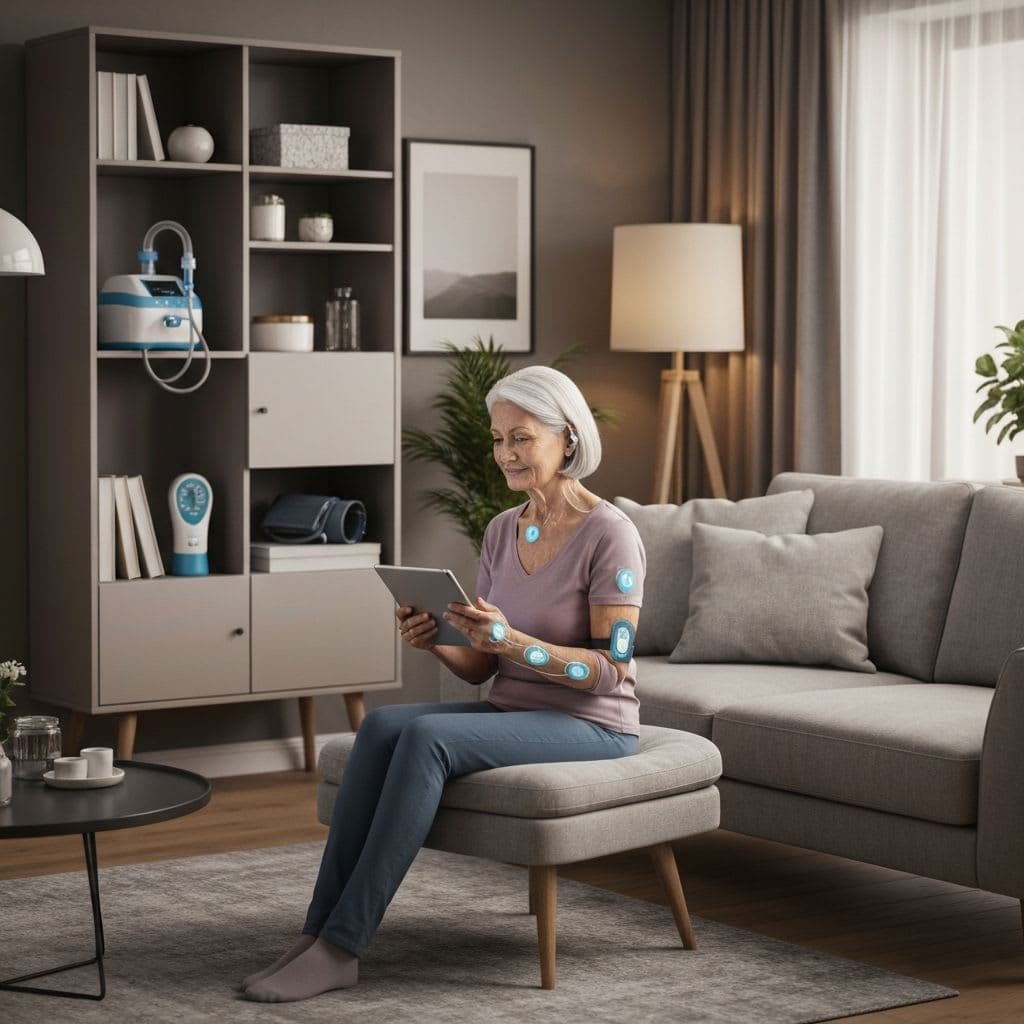
Discover how emerging healthcare technologies are transforming at-home care, improving patient outcomes, enhancing convenience, and reducing costs effectively.
Introduction
Healthcare is undergoing a dramatic transformation, driven by rapid advancements in technology. One of the most exciting developments is the shift toward at-home care, where patients can receive high-quality medical attention without stepping into a hospital. This shift is not only improving patient comfort but also reducing healthcare costs and enhancing accessibility.
As populations age and chronic diseases become more prevalent, the demand for efficient and scalable healthcare solutions is rising. Future healthcare technology is stepping up to meet these challenges, offering innovative tools that empower both patients and healthcare providers. From wearable devices to artificial intelligence, the future of at-home care is bright, efficient, and patient-centered.
In this blog, we will explore how cutting-edge technologies are revolutionizing at-home care and what it means for the future of healthcare.
The Rise of At-Home Healthcare
At-home healthcare is not a new concept, but it has gained significant momentum in recent years. Factors such as the COVID-19 pandemic, rising healthcare costs, and advancements in digital technologies have accelerated its adoption.
Why At-Home Care Is Growing
- Increased demand for personalized care
- Rising elderly population
- Need to reduce hospital overcrowding
- Advances in remote monitoring technology
- Cost-effectiveness compared to hospital stays
Patients today prefer receiving care in the comfort of their homes, where they feel more relaxed and supported by family members.
Key Technologies Transforming At-Home Care
1. Telemedicine and Virtual Consultations
Telemedicine has become a cornerstone of modern healthcare. Patients can now consult doctors via video calls, reducing the need for physical visits.
Benefits:
- Saves time and travel costs
- Improves access for rural patients
- Enables quick diagnosis and follow-ups
Example:
A patient with diabetes can regularly consult their doctor online to monitor blood sugar levels and adjust medications accordingly.
2. Wearable Health Devices
Wearable technology is revolutionizing how we monitor health. Devices like smartwatches and fitness trackers can track vital signs in real-time.
Common Metrics Monitored:
- Heart rate
- Blood pressure
- Oxygen saturation
- Sleep patterns
Practical Tip:
Choose wearable devices that integrate with healthcare apps to share data directly with your doctor.
3. Remote Patient Monitoring (RPM)
Remote Patient Monitoring allows healthcare providers to track patient health data from a distance.
How It Works:
- Devices collect health data
- Data is transmitted to healthcare providers
- Alerts are generated for abnormal readings
Advantages:
- Early detection of health issues
- Reduced hospital readmissions
- Continuous care for chronic conditions
4. Artificial Intelligence (AI) in Healthcare
AI is playing a critical role in diagnosing diseases and predicting health outcomes.
Applications:
- Symptom analysis
- Predictive analytics
- Personalized treatment plans
Example:
AI-powered apps can analyze symptoms and suggest possible conditions, helping patients decide whether to seek immediate care.
5. Smart Home Healthcare Systems
Smart homes equipped with healthcare technologies are becoming increasingly popular.
Features:
- Voice-controlled medical reminders
- Fall detection systems
- Emergency alert systems
Practical Tip:
Install smart sensors for elderly family members to ensure safety and quick emergency response.
6. Robotics in Home Care
Robotics is making its way into home healthcare, assisting patients with daily activities.
Uses:
- Medication reminders
- Mobility assistance
- Companionship for elderly patients
Benefits of Future Healthcare Technology in At-Home Care
Improved Patient Comfort
Patients recover faster when they are in a familiar environment. At-home care reduces stress and promotes emotional well-being.
Cost Efficiency
Hospital stays can be expensive. At-home care significantly reduces costs associated with:
- Room charges
- Transportation
- Hospital equipment
Enhanced Accessibility
Technology bridges the gap for patients in remote areas, ensuring they receive timely medical attention.
Personalized Care
Data-driven insights allow healthcare providers to tailor treatments based on individual patient needs.
Challenges and Considerations
While the future of at-home care is promising, there are challenges that need to be addressed.
Data Privacy and Security
With increased use of digital tools, protecting patient data is crucial.
Technology Adoption
Not all patients, especially the elderly, are comfortable using advanced technologies.
Infrastructure Limitations
Reliable internet access is essential for remote healthcare services.
Regulatory Issues
Healthcare regulations must evolve to accommodate new technologies.
Practical Tips for Embracing At-Home Healthcare
If you are considering at-home healthcare solutions, here are some tips:
For Patients:
- Invest in reliable wearable devices
- Use trusted telemedicine platforms
- Keep digital health records updated
- Ensure a stable internet connection
For Caregivers:
- Learn to use healthcare apps and devices
- Monitor patient data regularly
- Stay connected with healthcare providers
For Healthcare Providers:
- Adopt integrated digital systems
- Train staff for remote care delivery
- Ensure data security compliance
Future Trends to Watch
The evolution of healthcare technology is far from over. Here are some trends to keep an eye on:
1. 5G-Enabled Healthcare
Faster internet speeds will enhance real-time monitoring and virtual consultations.
2. Advanced AI Diagnostics
AI will become more accurate in diagnosing complex diseases.
3. Blockchain for Health Records
Secure and transparent data management systems will improve trust and efficiency.
4. Personalized Medicine
Genetic data will be used to create highly customized treatment plans.
Conclusion
Future healthcare technology is reshaping the way we think about medical care. At-home care is no longer just a convenienceit is becoming a necessity in a rapidly evolving world.
With innovations like telemedicine, wearable devices, AI, and smart home systems, patients can now receive high-quality care without leaving their homes. While challenges remain, the benefits far outweigh the drawbacks, making at-home healthcare a key component of the future medical landscape.
As technology continues to advance, we can expect even more groundbreaking solutions that will further enhance patient care, improve outcomes, and make healthcare more accessible for everyone.
The future of healthcare is not just in hospitalsit is right at home.