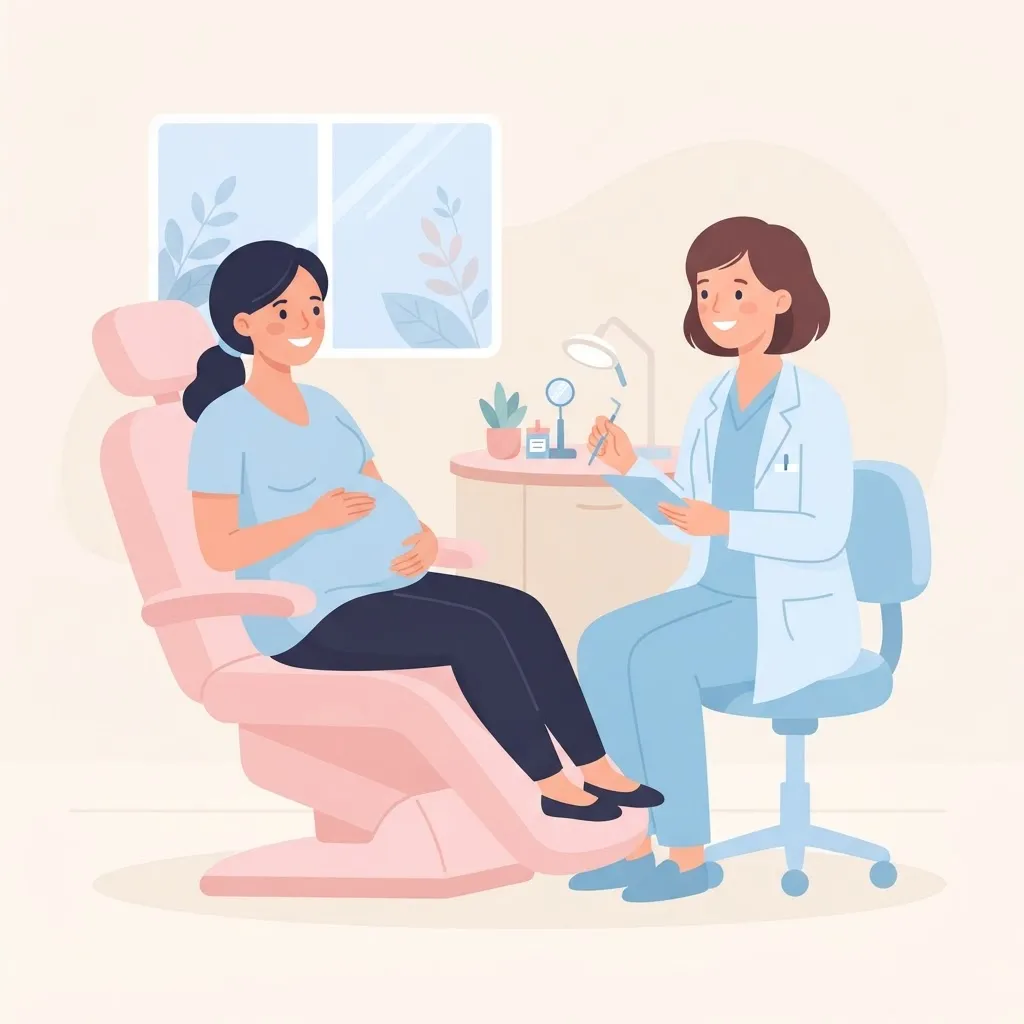
Dentists advise postponing teeth whitening during pregnancy. Learn why, what dental care is safe while expecting, and safe ways to keep your smile bright.
Last updated: July 23, 2026
Introduction
Pregnancy changes almost everything about how you approach health decisions, and cosmetic treatments are no exception. If you are expecting and dreaming of a brighter smile, you have probably asked the question directly: can pregnant women get teeth whitening?
The prevailing medical guidance is clear and consistent: teeth whitening is generally not recommended during pregnancy. This is not because whitening has been proven harmful to a developing baby, but because it has not been proven safe, and in medicine, that distinction matters enormously. This article explains exactly why dentists and obstetricians advise waiting, what the research does and does not show, which oral care treatments remain perfectly safe during pregnancy, and how to keep your smile bright until whitening is back on the table.
Table of Contents
- The short answer: why dentists say wait
- How teeth whitening actually works
- What the research says about peroxide and pregnancy
- Why pregnancy makes whitening riskier for you, too
- What about whitening toothpastes and strips?
- Dental care that is safe during pregnancy
- Safe ways to keep your smile bright while pregnant
- Whitening while breastfeeding
- When can you whiten after giving birth?
- Frequently asked questions
- Conclusion
The Short Answer: Why Dentists Say Wait
Major dental and medical organizations, including the American Dental Association and the American College of Obstetricians and Gynecologists, take a precautionary stance on elective cosmetic procedures during pregnancy. Their position on whitening comes down to a simple principle: elective treatments with unstudied effects should be postponed when a developing baby is involved.
Teeth whitening relies on hydrogen peroxide or carbamide peroxide, chemicals that penetrate tooth enamel to break apart stain molecules. No rigorous clinical trials have tested these agents on pregnant women, because ethically, no such trial would ever be approved. Without safety data, the responsible default is to wait. Whitening is never urgent, pregnancy is temporary, and your teeth will whiten just as effectively a few months from now.
How Teeth Whitening Actually Works
Understanding the mechanism clarifies the concern. Whitening products use peroxide compounds in concentrations ranging from about 3% in over-the-counter strips to 25% to 40% in professional in-office treatments.
When applied to teeth, peroxide penetrates the enamel and dentin, releasing free radicals that oxidize the pigmented molecules responsible for stains. Some of that peroxide inevitably contacts the gums and saliva, and small amounts can be swallowed or absorbed through oral tissues. In non-pregnant adults, this exposure is considered safe and well tolerated. During pregnancy, the question becomes whether even small systemic exposures are acceptable when they serve no medical purpose, and the consensus answer is no.
What the Research Says About Peroxide and Pregnancy
Here is an honest summary of the evidence landscape as of 2026.
There is no direct evidence that teeth whitening harms a developing fetus. There is also no direct evidence establishing its safety, because pregnant women are systematically excluded from whitening studies. Animal and laboratory research shows that high doses of hydrogen peroxide can generate oxidative stress in tissues, but these doses far exceed anything encountered in a dental whitening session.
This evidence gap is precisely why professional guidance lands on postponement. When a treatment is purely cosmetic, entirely optional, and easily delayed, even a small theoretical risk outweighs the benefit. It is the same logic behind avoiding unnecessary medications, elective X-rays, and cosmetic injectables during pregnancy.
Why Pregnancy Makes Whitening Riskier for You, Too
The baby is not the only consideration. Pregnancy changes your mouth in ways that make whitening a worse experience for the mother as well.
Pregnancy gingivitis
Hormonal shifts, particularly elevated progesterone, increase blood flow to the gums and heighten their sensitivity to plaque. Between 60% and 75% of pregnant women develop some degree of pregnancy gingivitis: swollen, tender gums that bleed easily. Peroxide gels are known gum irritants even in healthy mouths. Applying them to inflamed pregnancy gums invites significant discomfort and irritation.
Increased tooth sensitivity
Many women report heightened tooth sensitivity during pregnancy. Whitening temporarily increases sensitivity in most users, so combining the two can make eating, drinking, and even breathing cold air genuinely painful.
Enamel stress from morning sickness
Frequent vomiting or acid reflux, common in the first trimester and sometimes beyond, bathes teeth in stomach acid and can soften the enamel surface. Whitening chemically stresses enamel further, which is a poor combination for tooth health.
What About Whitening Toothpastes and Strips?
Over-the-counter products occupy a gray zone, so let's break them down.
Whitening toothpastes that work through mild abrasives and contain little or no peroxide are generally considered acceptable during pregnancy. They remove surface stains mechanically rather than chemically bleaching the tooth. Check the label: if peroxide is absent or minimal, most dentists have no objection.
Whitening strips and gel trays contain meaningful peroxide concentrations and are designed for extended contact with teeth and gums. Most dentists recommend avoiding these during pregnancy for the same precautionary reasons as professional whitening.
LED whitening kits sold online combine peroxide gels with light activation. The light itself is not the issue; the peroxide gel is, so these fall into the "wait" category too.
When in doubt, bring the specific product to your dentist or obstetrician and ask. Personalized advice always beats general rules.
Dental Care That Is Safe During Pregnancy
It is worth being emphatic here, because fear sometimes causes pregnant women to skip dental care entirely, and that genuinely harms both mother and baby.
The following are not only safe but actively recommended during pregnancy:
- Routine checkups and professional cleanings, ideally scheduled in the second trimester for comfort
- Treatment of cavities and gum disease, since untreated oral infection is associated with adverse pregnancy outcomes, including preterm birth in some studies
- Local anesthetic for necessary procedures, which is considered safe in standard doses
- Dental X-rays when needed, with appropriate shielding, per current ADA guidance
Untreated gum disease poses a far greater documented risk to pregnancy than a dental cleaning ever could. Keep your appointments.
Safe Ways to Keep Your Smile Bright While Pregnant
You do not need peroxide to maintain a noticeably brighter smile for nine months. These habits deliver real results:
- Brush twice daily with a soft brush and a mildly abrasive whitening toothpaste, being gentle with sensitive gums.
- Floss daily. Plaque buildup along the gumline dulls the appearance of teeth and worsens pregnancy gingivitis.
- Get a professional cleaning. A hygienist's polish removes months of surface stains and is completely safe during pregnancy. Many patients are surprised how much whiter their teeth look after a cleaning alone.
- Rinse after morning sickness with water or a teaspoon of baking soda in water, and wait 30 minutes before brushing so you do not scrub acid-softened enamel.
- Moderate staining drinks. You are likely limiting coffee already; drinking it through a straw and rinsing with water afterward reduces staining further.
- Snack on crunchy produce. Apples, carrots, and celery mechanically scrub tooth surfaces and stimulate cleansing saliva.
Whitening While Breastfeeding
After delivery, many mothers ask whether nursing changes the equation. The theoretical exposure route, peroxide entering breast milk, is considered extremely unlikely because the small amounts absorbed orally break down rapidly into water and oxygen in the body. Many dentists consider whitening acceptable during breastfeeding, while some still counsel waiting until weaning out of an abundance of caution. Discuss your specific situation with your dentist; this one is a genuine judgment call rather than a firm guideline.
When Can You Whiten After Giving Birth?
If you are not breastfeeding, you can generally whiten as soon as you like after delivery, once any pregnancy gingivitis has settled. Give your gums a few weeks to return to normal and consider a professional cleaning first, both for health and because whitening works better on freshly cleaned teeth.
If you are breastfeeding, have the conversation with your dentist described above. Either way, an in-office whitening session or a dentist-supervised take-home kit will be waiting for you, and your results will be just as good as they would have been nine months earlier.
Frequently Asked Questions
Can I get my teeth whitened while pregnant?
Dentists recommend against it. Whitening is an elective cosmetic procedure using peroxide chemicals that have never been safety-tested in pregnancy. Because the treatment is optional and easily postponed, the standard guidance is to wait until after delivery.
Is whitening toothpaste safe during pregnancy?
Generally yes, provided it whitens through mild abrasives rather than significant peroxide content. It removes surface stains mechanically and involves minimal chemical exposure. Check the ingredient list and confirm with your dentist if unsure.
What happens if I whitened my teeth before I knew I was pregnant?
Do not panic. There is no evidence that a whitening session in early pregnancy causes harm. The recommendation to avoid whitening is precautionary, not based on documented adverse outcomes. Mention it to your obstetrician for reassurance and simply postpone further treatments.
Are dental cleanings safe while pregnant?
Yes, completely, and they are strongly encouraged. Professional cleanings protect against pregnancy gingivitis and gum disease, which carry real documented risks to pregnancy. A cleaning also noticeably brightens teeth by removing surface stains.
Why are my teeth more yellow during pregnancy?
Several factors converge: hormonal gum inflammation changes the frame around your teeth, morning sickness acid can dull enamel, dry mouth reduces natural cleansing, and fatigue sometimes disrupts oral care routines. A professional cleaning and consistent home care address most of this.
Can I use whitening strips in the third trimester?
The guidance does not change by trimester. Whitening strips contain peroxide in meaningful concentrations, and the precautionary recommendation to avoid them applies throughout pregnancy.
Is laser or LED whitening safer than gel whitening during pregnancy?
No. Light-activated systems still depend on peroxide gel; the light merely accelerates the reaction. The chemical exposure is the concern, so all peroxide-based methods fall under the same wait-until-after-delivery advice.
Conclusion
So, can pregnant women get teeth whitening? The safest, expert-backed answer is: not now, but soon. No study has shown whitening harms a pregnancy, but none has established its safety either, and for a purely cosmetic treatment, that uncertainty is reason enough to wait. Pregnancy also makes whitening physically unpleasant, thanks to sensitive gums and heightened tooth sensitivity.
In the meantime, you have excellent options: professional cleanings, gentle whitening toothpaste, smart eating habits, and diligent daily care will keep your smile genuinely bright. Once your baby arrives and your dentist gives the green light, whitening will deliver the same great results it always would have.
Health publishers and dental practices know that expectant mothers research questions like this constantly. Reaching them with accurate, trustworthy answers takes thoughtful content writing supported by clear visual explainers, and a well-crafted infographic design can turn guidance like this into shareable patient education that builds real trust.