Yes, composite bonding can be removed safely by a dentist. Learn how removal works, whether it damages enamel, costs, and when removal makes sense.
Last updated: July 23, 2026
Introduction
Composite bonding has become one of the most popular cosmetic dental treatments in the world, and for good reason: it is fast, affordable, and requires little to no drilling of natural tooth structure. But a question many patients ask, sometimes before treatment and sometimes years afterward, is this: can composite bonding be removed?
The short answer is yes. Composite bonding can be removed safely by a qualified dentist, and in most cases the natural tooth underneath remains intact. However, the full picture involves important details about how removal works, whether it damages enamel, what it costs, and when removal actually makes sense. This guide covers all of it, so you can make an informed decision about your smile.
Table of Contents
- What is composite bonding?
- Can composite bonding be removed? The short answer
- How dentists remove composite bonding
- Does removal damage your natural teeth?
- Reasons people have bonding removed
- What happens after removal
- Removal and replacement: what to expect
- Cost of removing composite bonding
- Can you remove bonding at home?
- Frequently asked questions
- Conclusion
What Is Composite Bonding?
Composite bonding, also called dental bonding or tooth bonding, is a cosmetic procedure in which a dentist applies a tooth-colored resin material to the surface of a tooth, sculpts it into shape, hardens it with a curing light, and polishes it to blend seamlessly with the surrounding enamel.
Dentists use bonding to close small gaps, repair chips, reshape uneven edges, cover discoloration, and make teeth look longer or more symmetrical. Unlike veneers or crowns, bonding is usually an additive procedure: material is added on top of the tooth rather than removing healthy structure to make room. This additive nature is exactly why bonding is considered reversible, and it is central to answering the removal question.
Can Composite Bonding Be Removed? The Short Answer
Yes, composite bonding can be removed. Because the resin sits on top of the enamel and is attached with an adhesive layer rather than fused into the tooth, a dentist can carefully polish and buff it away. When done correctly, the natural tooth underneath emerges essentially as it was before treatment.
There are two important qualifications. First, removal must be done by a dental professional with the right instruments and magnification. Second, "reversible" assumes the original bonding was minimally invasive. If your dentist lightly roughened the enamel surface before bonding, which is standard practice, a microscopic layer of enamel was altered. This is clinically insignificant for most patients, but it means "100% untouched" is not quite accurate, and honest dentists will explain this distinction.
How Dentists Remove Composite Bonding
Understanding the removal process helps explain why professional removal is safe and DIY attempts are not.
Step 1: Assessment and identification
The dentist first identifies exactly where the composite ends and natural enamel begins. This is harder than it sounds, because good bonding is designed to be invisible. Dentists use magnification loupes, specialized lighting, and sometimes air-drying techniques that make the resin appear slightly duller than enamel.
Step 2: Careful reduction
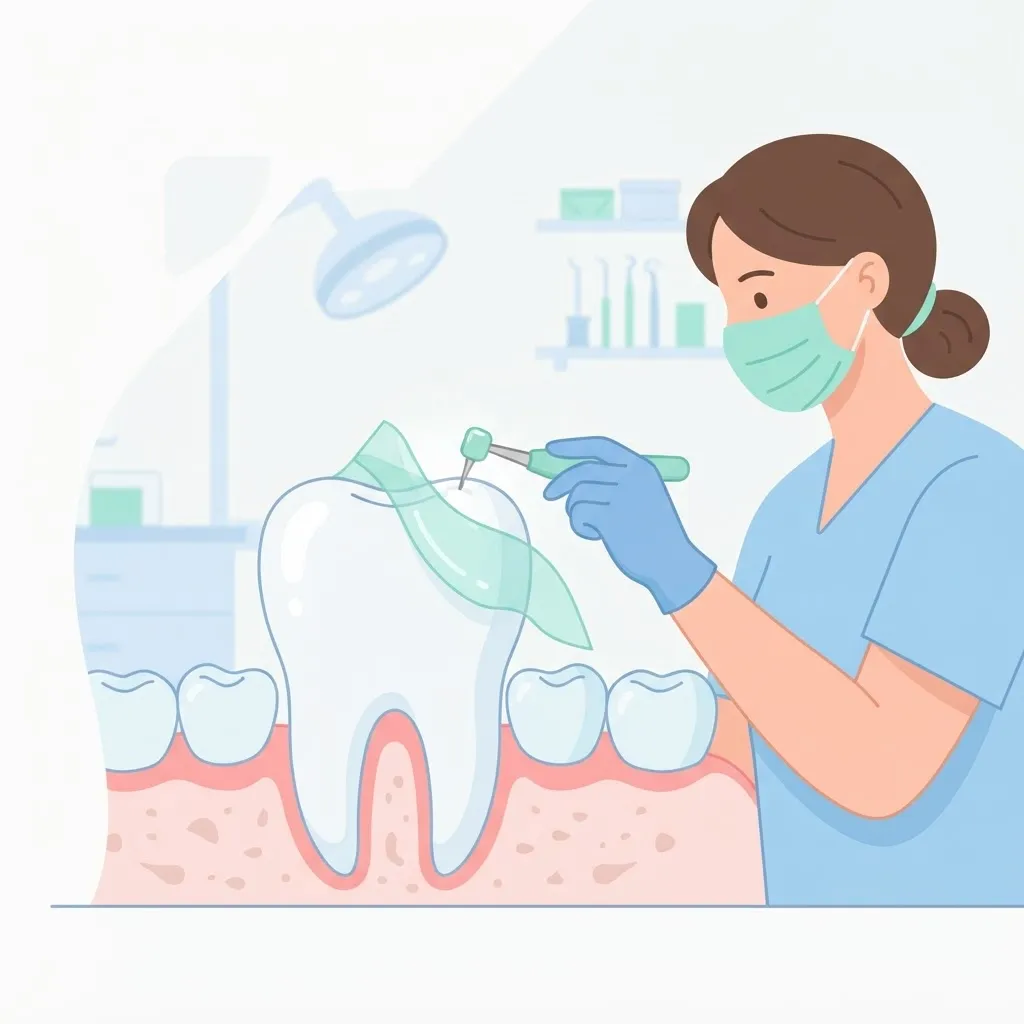
Using a fine-grit polishing bur or disc at controlled speed, the dentist gradually reduces the composite layer by layer. The goal is to remove resin without ever touching enamel. Experienced clinicians work slowly, frequently pausing to re-examine the surface.
Step 3: Final polishing
Once all composite is gone, the tooth is polished with progressively finer discs and pastes to restore the natural luster of the enamel. A fluoride treatment is sometimes applied afterward to support the enamel surface.
The entire process typically takes 15 to 45 minutes per tooth depending on how much composite is present and how it was originally applied.
Does Removal Damage Your Natural Teeth?
This is the concern behind most removal questions, and the honest answer is: not when performed properly, but technique matters enormously.
When a skilled dentist removes bonding with fine instruments and magnification, enamel loss is negligible, on the order of microns, if any. Studies on composite removal consistently show that careful polishing techniques preserve the enamel surface. The risks arise with rushed or careless removal: aggressive burs, high speed, and poor visibility can gouge enamel, leave the surface rough, or create sensitivity.
There is one more nuance. If your original bonding involved etching the enamel with a mild acid gel, which almost all bonding does, the outermost enamel layer was microscopically textured to help the resin grip. After removal and polishing, this surface is smoothed again, but it is not chemically identical to virgin enamel. In practical terms, your tooth will look, feel, and function normally. Most patients cannot tell any difference whatsoever.
Reasons People Have Bonding Removed
Patients choose to remove composite bonding for several common reasons:
- Staining and discoloration. Composite resin absorbs pigments from coffee, tea, red wine, and tobacco over time. Unlike enamel, it cannot be whitened, so heavily stained bonding often looks worse than the natural teeth around it.
- Chipping or wear. Bonding typically lasts 5 to 10 years. Edges can chip, and surfaces lose their polish, especially on front teeth that bite into food.
- Aesthetic preference changes. Some patients decide they preferred their natural tooth shape, or they want to upgrade to porcelain veneers for a longer-lasting result.
- Poorly executed original work. Bulky, opaque, or mismatched bonding is unfortunately common, and removal followed by replacement can dramatically improve the result.
- Orthodontic treatment. Braces or aligners sometimes require bonding removal so teeth can be moved into a better position first.
What Happens After Removal
If you simply want your natural teeth back, removal is the end of the road. Your dentist polishes the enamel, checks the bite, and you leave with your original smile. Mild sensitivity for a day or two is possible but uncommon.
Keep in mind why the bonding was placed originally. If it covered a chip or a gap, that chip or gap will be visible again. Some patients are perfectly happy with this; others realize they want the imperfection addressed in a different way. Discussing this with your dentist before removal prevents surprises.
Removal and Replacement: What to Expect
Most bonding removal appointments are actually removal-and-replacement appointments. The old, stained, or chipped composite comes off, and fresh composite goes on in the same visit.
Replacement bonding follows the same process as the original: the tooth is cleaned and lightly etched, adhesive is applied, and new resin is sculpted, cured, and polished. Modern composites have improved noticeably in stain resistance and polish retention, so a replacement often outperforms bonding placed a decade ago. If you are switching from bonding to porcelain veneers instead, the dentist removes the composite first, then evaluates how much natural preparation the veneers require.
Cost of Removing Composite Bonding
Costs vary by region, practice, and complexity, but general ranges in 2026 look like this:
- Simple removal only: roughly $50 to $150 per tooth
- Removal plus replacement bonding: roughly $250 to $600 per tooth
- Removal as part of a veneer transition: usually folded into the veneer fee
Because removal is nearly always considered cosmetic, dental insurance rarely covers it unless the bonding is failing in a way that affects oral health. Always request a written estimate before treatment.
Can You Remove Bonding at Home?
No, and this deserves emphasis. Composite resin is engineered to withstand years of chewing forces. No safe home method exists to remove it. Filing, picking, or using abrasive products will damage your enamel long before they remove the composite, and enamel does not grow back. Whitening products will not dissolve or lift bonding either; they simply do not act on resin.
If your bonding is bothering you, book a dental appointment. Professional removal is quick, painless, and inexpensive compared to repairing self-inflicted enamel damage.
Frequently Asked Questions
Is composite bonding removal painful?
No. Because the dentist is polishing away material that sits on top of your tooth, there is no drilling into living tooth structure. Most patients need no anesthetic at all. You may feel mild vibration and hear the polishing instrument, but the procedure is generally comfortable.
How long does it take to remove composite bonding?
Typically 15 to 45 minutes per tooth. Thin, well-placed bonding comes off faster; thick or extensive bonding covering the whole front surface of a tooth takes longer because the dentist works carefully to protect the enamel underneath.
Will my teeth look normal after bonding is removed?
Yes, in the vast majority of cases. The enamel is polished back to its natural luster. Remember, though, that any chip, gap, or discoloration the bonding originally concealed will be visible again once the composite is gone.
Can bonding be removed and redone in the same appointment?
Yes, and this is the most common scenario. Dentists routinely remove old, stained composite and apply fresh material in a single visit, restoring the appearance of the tooth immediately.
Does removing bonding weaken the tooth?
Not when done professionally. The resin is removed with fine polishing instruments that spare the enamel. The tooth retains its original strength because bonding removal, unlike crown removal, involves no structural reduction of the tooth.
How do I know if my bonding needs to be removed or just polished?
Surface stains and minor dullness can often be fixed with professional re-polishing, which is faster and cheaper than full removal. Deep staining, chips, or marginal gaps usually require removal and replacement. Your dentist can tell you which applies after a quick examination.
Can whitening treatments remove or lighten bonding?
No. Whitening agents like hydrogen peroxide act on natural tooth structure only. They will not lighten composite resin, which is why dentists recommend whitening your natural teeth first and then matching new bonding to the lighter shade.
Conclusion
Composite bonding can absolutely be removed, and when a skilled dentist performs the procedure, your natural tooth emerges healthy and intact. Removal is quick, essentially painless, and affordable, whether you want your original smile back, need to replace aging composite, or are upgrading to a different cosmetic treatment.
The key takeaways: never attempt removal at home, choose a dentist who uses magnification and fine polishing techniques, and think ahead about what you want your smile to look like after the composite is gone. Bonding's reversibility is one of its greatest strengths, and it means you are never locked into a decision about your smile.
If you found this guide helpful, well-researched dental content like this is exactly what patients search for every day. Practices and health publishers looking to reach those readers can benefit from professional content writing and a smart digital marketing strategy that turns genuine patient questions into trusted, discoverable answers.