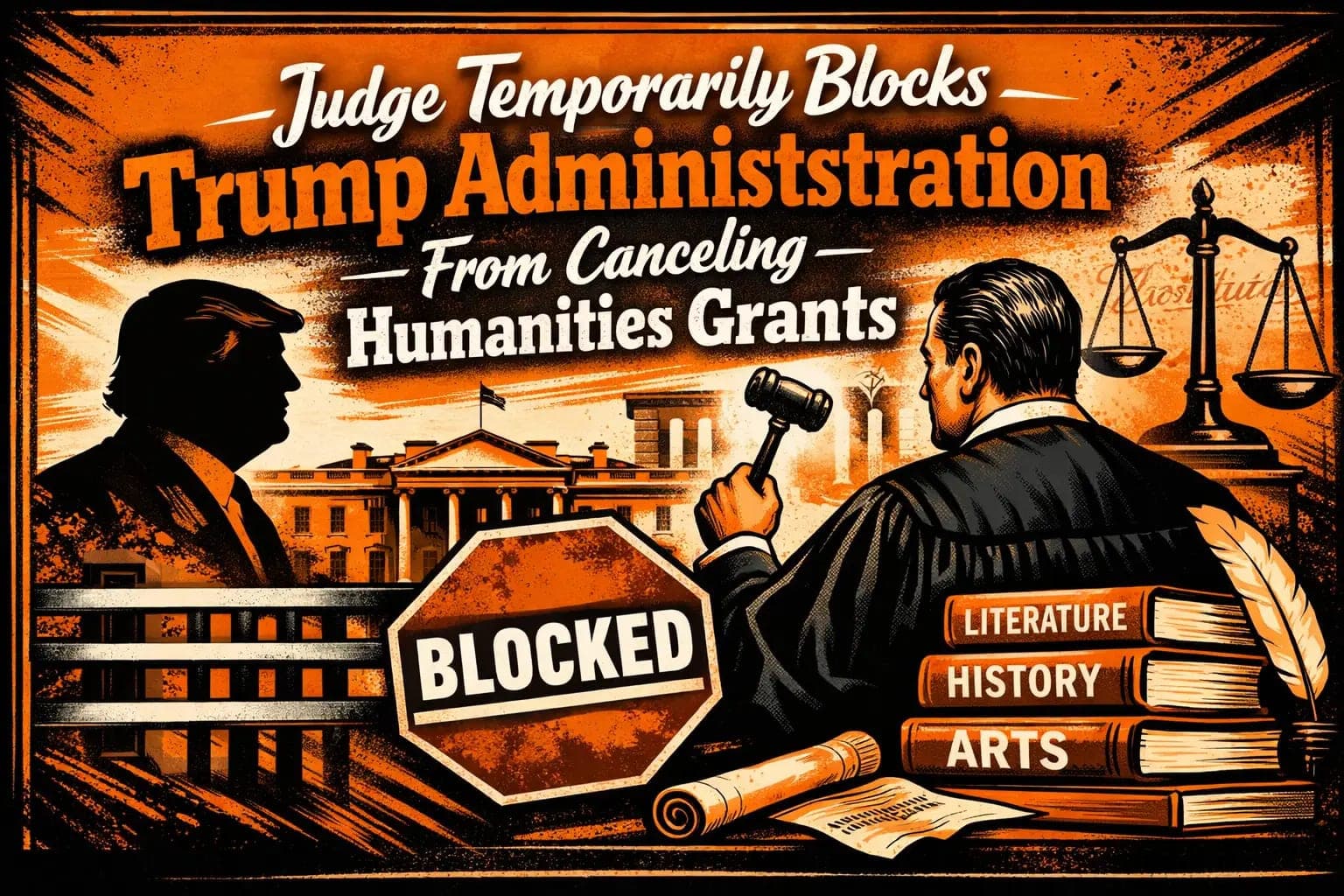
A federal judge has stepped in to halt the cancellation of key humanities grants, sparking debate over government authority and cultural funding.
Introduction
In a significant legal development, a federal judge has temporarily blocked an attempt by the Trump administration to cancel federal humanities grants. The decision has sparked widespread discussion about the role of government in supporting cultural and academic initiatives, as well as the limits of executive authority.
This ruling provides temporary relief to institutions and organizations that rely heavily on these funds, while also setting the stage for a broader legal battle.
Background of the Case
What Are Humanities Grants?
Humanities grants are federal funds typically distributed through agencies such as the National Endowment for the Humanities (NEH). These grants support a wide range of initiatives, including:
- Academic research
- Museum exhibitions
- Cultural preservation projects
- Public education programs
Such funding plays a crucial role in preserving history, promoting critical thinking, and enriching public discourse.
The Administration’s Move
The Trump administration had sought to cancel or significantly reduce these grants as part of broader budgetary and policy priorities. Officials argued that:
- Federal spending needed to be reduced
- Private sector funding could potentially fill the gap
- Government resources should be redirected to other areas
However, critics viewed the move as harmful to education and cultural preservation.
The Judge’s Ruling
Temporary Injunction Explained
The federal judge issued a temporary injunction, which means:
- The cancellation of grants is paused
- Funding must continue for now
- Further legal review will determine the final outcome
This type of ruling is often used to prevent immediate harm while a case is fully examined.
Key Reasons Behind the Decision
While the full legal reasoning may evolve, the judge’s decision likely considered:
- Potential violation of administrative procedures
- Harm to institutions relying on the funding
- The need to maintain stability during legal proceedings
Impact on Stakeholders
Educational Institutions
Universities and colleges that depend on humanities funding can continue their projects without immediate disruption. This ensures:
- Ongoing research continuity
- Job security for scholars and staff
- Stability for students involved in funded programs
Cultural Organizations
Museums, libraries, and nonprofits also benefit from the ruling. Many of these organizations operate on tight budgets and rely heavily on federal support.
Researchers and Scholars
For individual researchers, the injunction provides breathing room. It allows them to:
- Complete ongoing work
- Avoid sudden funding gaps
- Plan future research with more certainty
Broader Implications
Government Authority vs. Legal Oversight
This case highlights an ongoing tension between executive power and judicial oversight. Key questions include:
- Can the administration unilaterally cancel congressionally approved funding?
- What role should courts play in reviewing such decisions?
The Future of Humanities Funding
The outcome of this legal battle could shape the future of federal support for the humanities. Possible scenarios include:
- Restoration of full funding
- Gradual reduction with legislative approval
- Increased reliance on private funding sources
What Happens Next?
The temporary block is just the beginning. The case will likely proceed through the courts, where both sides will present detailed arguments. Possible next steps include:
- A full hearing on the legality of the funding cuts
- Appeals from either party
- Potential involvement of higher courts
The final decision could set a precedent for similar cases in the future.
Conclusion
The judge’s decision to temporarily block the cancellation of humanities grants represents a critical moment for education, culture, and public policy. While the ruling offers short-term relief, the long-term future of these programs remains uncertain.
As the legal process unfolds, stakeholders across academia and the arts will be watching closely. The case not only affects funding but also raises fundamental questions about the value of the humanities in society and the government’s role in supporting them.