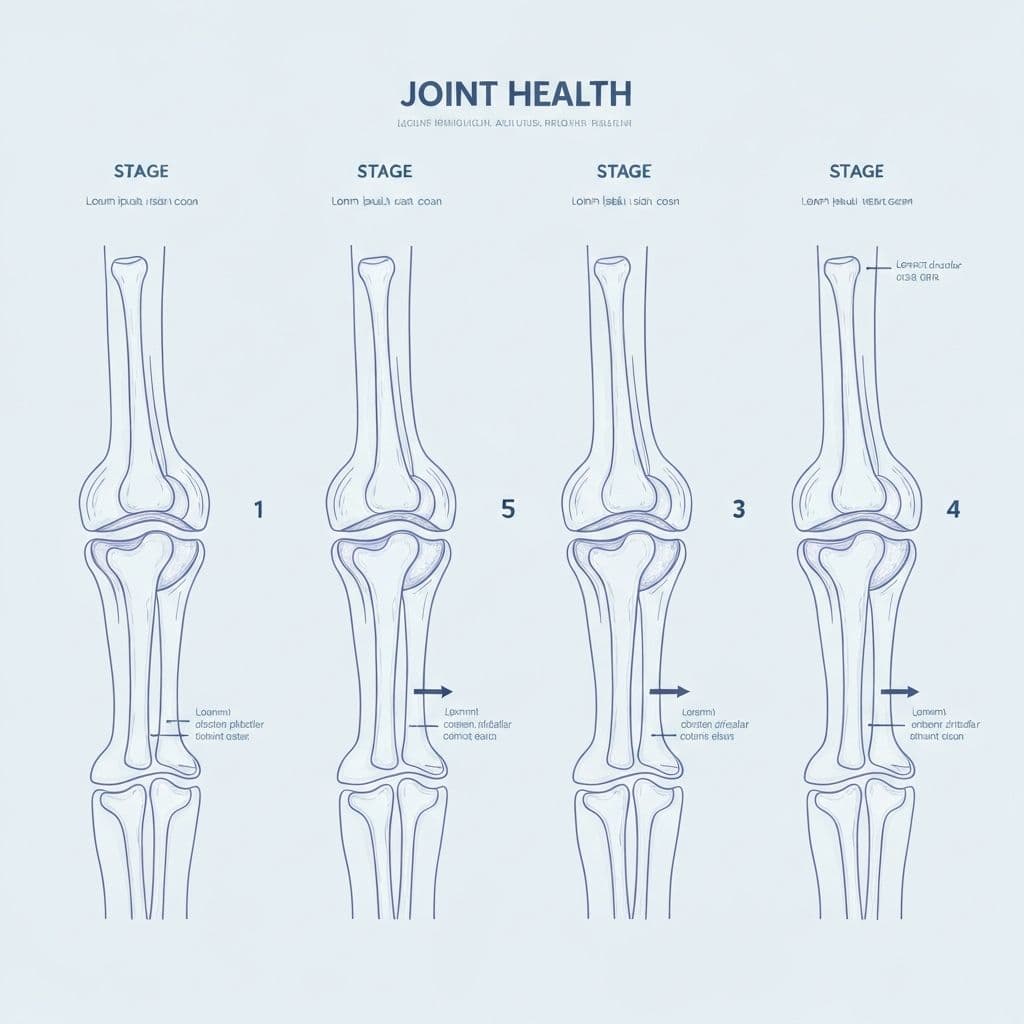
Learn the four progression stages of rheumatoid arthritis. Understand early symptoms, disease progression, joint damage, and treatment approaches for each stage.
What Are The 4 Stages of Rheumatoid Arthritis: Complete Progression Guide
Introduction
Rheumatoid arthritis (RA) is a progressive autoimmune disease affecting millions worldwide. Understanding the 4 stages of rheumatoid arthritis helps patients recognize disease progression, understand treatment necessity, and make informed health decisions. These stages represent distinct phases from early inflammation through advanced joint destruction, each with specific symptoms, diagnostic findings, and treatment implications.
RA differs fundamentally from osteoarthritis, which results from wear-and-tear. RA occurs when the immune system mistakenly attacks joint linings (synovium), causing chronic inflammation. Early recognition and aggressive treatment have dramatically improved outcomes for RA patients, making stage awareness critical for achieving remission or low disease activity.
Table of Contents
- Understanding Rheumatoid Arthritis Basics
- Stage 1: Early Stage/Clinical Remission
- Stage 2: Moderate Stage
- Stage 3: Severe Stage
- Stage 4: Terminal Stage
- Diagnostic Tools for Stage Determination
- Treatment Approaches by Stage
- Frequently Asked Questions
- Conclusion
Understanding Rheumatoid Arthritis Basics {#ra-basics}
What Is Rheumatoid Arthritis?
RA is a systemic autoimmune condition where antibodies attack joint tissue linings. This distinguishes it from:
- Osteoarthritis: Mechanical wear-and-tear of joints
- Lupus: Affects multiple organ systems
- Psoriatic arthritis: Associated with psoriasis skin condition
Why RA Progresses Through Stages
Without treatment, RA typically progresses through predictable stages characterized by:
- Increasing inflammation: Immune response intensifies
- Progressive joint damage: Cartilage and bone gradually erode
- Functional decline: Mobility and hand function decrease
- Systemic complications: Other organs may be affected
The Importance of Early Intervention
Modern treatment paradigm: "Treat to target"
- Early aggressive treatment prevents progression
- Goal is remission or low disease activity
- Most damage occurs in first 2 years if untreated
- Early intervention dramatically improves long-term outcomes
Stage 1: Early Stage/Clinical Remission {#stage-1}
Characteristics of Stage 1 RA
Stage 1 represents the earliest phase, often called "clinical remission" when referring to well-controlled disease:
Inflammatory markers:
- Elevated rheumatoid factor (RF) or anti-CCP antibodies
- Increased ESR and CRP (inflammation markers)
- Immune system activated but not yet causing significant damage
Tissue involvement:
- Inflammation confined to synovium (joint lining)
- No erosions visible on X-ray
- Cartilage intact
- Bone structure normal
Stage 1 Symptoms
Early presentations typically include:
- Joint pain, stiffness, swelling
- Morning stiffness lasting 1-2 hours
- Affects small joints first (hands, feet)
- Often symmetrical (both sides of body)
- Fatigue
- Low-grade fever
- General malaise
Pattern recognition:
- Gradual or sudden onset
- Symptoms worse in morning
- Symptoms improve with activity (initially)
- Affects quality of life but joints still functional
Diagnostic Findings in Stage 1
Laboratory tests:
- Positive rheumatoid factor (70-80% of patients)
- Positive anti-CCP antibodies (specific for RA)
- ESR (Erythrocyte Sedimentation Rate) elevated
- CRP (C-Reactive Protein) elevated
- Complete blood count often shows anemia
Imaging:
- X-rays: No erosions visible
- Ultrasound: May show synovial inflammation before X-ray changes
- MRI: Most sensitive, shows early synovitis
Treatment Goals and Strategies for Stage 1
Aggressive early intervention:
DMARDs (Disease-Modifying Antirheumatic Drugs)
- Methotrexate (first-line agent)
- Sulfasalazine
- Leflunomide
- Combination therapy often used
Biologic agents (if conventional DMARDs insufficient)
- TNF inhibitors
- IL-6 inhibitors
- B-cell depleting agents
- JAK inhibitors
Supportive care
- NSAIDs for symptom relief
- Short-term corticosteroids
- Physical and occupational therapy
Goals:
- Achieve remission or low disease activity
- Prevent progression to Stage 2
- Maintain joint function
- Improve quality of life
Stage 2: Moderate Stage {#stage-2}
When RA Progresses to Stage 2
Stage 2 develops when:
- Stage 1 remains untreated or inadequately treated
- Early disease activity is not controlled
- Disease overcomes initial immune tolerance
- Progressive inflammation begins damaging structures
Timeline: Without treatment, typically 1-2 years after symptom onset
Pathologic Changes in Stage 2
Tissue destruction begins:
- Synovial inflammation: Becomes pronounced and chronic
- Pannus formation: Granulation tissue invades cartilage and bone
- Early cartilage erosion: Begins at joint margins
- Marginal erosions: Small bone erosions visible on X-ray
- Synovial fluid accumulation: Joint swelling increases
Clinical Features of Stage 2
Symptom progression:
- More persistent joint pain
- Morning stiffness lasting 2+ hours
- Joint swelling more pronounced
- Reduced range of motion
- Loss of grip strength
- Fatigue increases significantly
- Weight loss may occur
- Anemia may develop
Functional limitations emerge:
- Difficulty opening jars
- Challenges with fine motor tasks
- Walking difficulties if lower extremities affected
- Sleep disruption from pain
Diagnostic Findings in Stage 2
Laboratory values:
- Elevated RF and anti-CCP antibodies
- Markedly elevated ESR and CRP
- Progressive anemia
- Elevated platelet count
Imaging changes:
- X-rays: Early marginal erosions visible
- Ultrasound: Synovial inflammation with erosions
- MRI: Extensive synovitis with cartilage involvement
Erosion characteristics:
- Typically 1-3 mm
- Located at joint margins
- Progressive if untreated
Treatment Modifications for Stage 2
Escalated therapy:
DMARD optimization
- Increase dosages
- Switch to different DMARD
- Combine multiple DMARDs
Introduction of biologics
- Strongly considered at this stage
- TNF inhibitors most commonly used
- IL-6 or JAK inhibitors if TNF inhibitors inadequate
Bridging therapy
- Short-term corticosteroids during medication adjustment
- NSAIDs for ongoing pain management
Goals shift toward preventing Stage 3 progression
Stage 3: Severe Stage {#stage-3}
Transition to Severe Disease
Stage 3 represents advanced RA with:
- Untreated or inadequately controlled Stage 2
- Poor response to conventional DMARDs
- Aggressive disease biology
- Significant structural damage accumulating
Tissue Destruction in Stage 3
Progressive damage:
- Extensive bone erosions: Multiple erosions affecting multiple joint surfaces
- Cartilage destruction: Significant cartilage loss
- Joint space narrowing: Marked reduction in space between bones
- Subluxation: Partial joint dislocation beginning
- Synovial fibrosis: Chronic inflammation causes scarring
- Tendon involvement: Tendons may rupture
Systemic manifestations:
- Rheumatoid nodules: Firm, benign subcutaneous nodules
- Pulmonary involvement: Interstitial lung disease
- Cardiac involvement: Increased cardiovascular risk
- Ocular involvement: Scleritis, episcleritis
- Vasculitis: Inflammation of blood vessels
Clinical Features of Stage 3
Severe symptoms:
- Chronic severe pain
- Multiple joint involvement
- Significant morning stiffness (>3 hours)
- Substantial swelling and warmth
- Markedly reduced function
- Visible joint deformities developing
- Severe fatigue
- Constitutional symptoms (fever, weight loss)
Functional impact:
- Difficulty with self-care
- Inability to perform job tasks
- Dependence on mobility aids
- Reduced independence
- Significant quality-of-life impact
Diagnostic Findings in Stage 3
Laboratory findings:
- Very high RF and anti-CCP antibodies
- Markedly elevated inflammatory markers (ESR, CRP)
- Moderate-to-severe anemia
- Possible thrombocytosis
Imaging characteristics:
- X-rays: Multiple erosions, significant joint space narrowing
- Erosion pattern: Extends beyond joint margins
- Involvement: Often polyarticular (many joints)
- Severity: Progressive changes evident on serial X-rays
Treatment Strategies for Stage 3
Intensive therapy required:
High-dose DMARDs and biologics
- Combination biologic therapy may be considered
- Triple-drug therapy common
- Continuous optimization needed
Aggressive biologic management
- Switch biologic agents if insufficient response
- Consider newer JAK inhibitors
- Add targeted therapies
Adjunctive treatments
- Extended NSAID use
- Low-dose corticosteroids
- Pain management optimization
- Rehabilitation services
Goals:
- Halt or slow progression
- Manage pain and maintain function
- Prevent systemic complications
- Prepare for potential surgical intervention
Stage 4: Terminal Stage {#stage-4}
Definition of Terminal Stage
Stage 4 represents complete destruction of joint architecture, occurring when:
- Stages 1-3 remain inadequately treated
- Chronic uncontrolled inflammation persists
- Severe bone and cartilage destruction is complete
Important note: Modern treatment has made Stage 4 much less common.
Pathologic Changes in Stage 4
Complete joint destruction:
- Bone fusion: Cartilage completely destroyed
- Joint ankylosis: Fusion between joint surfaces
- Complete bone erosion: Extensive erosive changes
- Total joint space loss: Bones touching with no intervening cartilage
- Severe deformities: Fixed, non-movable joints
- Soft tissue destruction: Advanced damage to tendons, ligaments
Clinical Features of Stage 4
Severely limited function:
- Immobility: Joints no longer move or move minimally
- Severe deformities: Permanent joint damage
- Swan-neck deformity in fingers
- Boutonniere deformity
- Z-thumb deformity
- Ulnar deviation
- Complete disability: Cannot perform self-care
- Chronic pain: Ongoing despite stability
- Systemic manifestations: Often severe
Diagnostic Confirmation of Stage 4
X-ray findings:
- Complete joint space loss
- Extensive erosions
- Joint ankylosis (fusion)
- Severe deformities
Associated systemic findings:
- Often accompanied by extraarticular manifestations
- Significant comorbidities
- Cardiovascular and pulmonary complications
Treatment in Stage 4
Management focuses on:
Pain control
- Medications optimized
- Alternative pain management approaches
Surgical intervention
- Joint replacement surgery (arthroplasty)
- Most effective treatment at this stage
- Multiple joints often need replacement
Rehabilitation
- Occupational therapy for adaptive strategies
- Physical therapy for remaining function
- Assistive devices to maximize independence
Prevention of further damage
- Continued medication therapy
- Infection prevention (especially after surgery)
- Monitoring for complications
Diagnostic Tools for Stage Determination {#diagnostic-tools}
Laboratory Tests
Serologic markers:
Rheumatoid factor (RF)
- Positive in 70-80% of RA patients
- Can be negative in seronegative RA
- Higher titers associated with worse prognosis
Anti-CCP (Cyclic Citrullinated Peptide) antibodies
- More specific for RA than RF
- Positive in 60-70% of patients
- Indicates aggressive disease
Inflammatory markers:
- ESR (Erythrocyte Sedimentation Rate): 30-50 mm/hour in active disease
- CRP (C-Reactive Protein): Usually 10-50 mg/L in active disease
- Platelet count: Often elevated in active disease
- Hemoglobin: Decreased in anemia of chronic disease
Imaging Studies
X-rays:
- Sensitive for erosions once present
- Shows bone and joint structure
- Useful for tracking progression
Ultrasound:
- Highly sensitive for early synovitis
- Detects erosions before X-ray changes
- Non-radiative
MRI:
- Most sensitive for early disease
- Detects synovitis and cartilage involvement
- Expensive, used for difficult cases
Treatment Approaches by Stage {#treatment-approaches}
Stage 1: Aggressive Early Therapy
Medications:
- Methotrexate (first-line)
- Early biologic consideration if severe
- NSAIDs and short-term corticosteroids
Success metrics:
- Achieve remission or low disease activity
- Prevent progression
- 70-80% remission rates with modern therapy
Stage 2: Escalation Therapy
Approach:
- Increase DMARD doses
- Add biologic agents
- Consider combination therapy
Prognosis:
- Good response to intensive treatment possible
- Earlier intervention = better outcomes
Stage 3: Intensive Multidrug Therapy
Complex regimens:
- Multiple biologics and DMARDs
- Close monitoring required
- Adjust based on response
Goals realistic:
- Control rather than remission
- Prevent further progression
- Maintain current function
Stage 4: Surgery and Supportive Care
Management:
- Joint replacement surgery primary intervention
- Palliative care approaches
- Focus on quality of life
Frequently Asked Questions {#faqs}
How quickly does RA progress through stages?
Variable progression:
- Some patients: Slow progression over years
- Others: Rapid progression within months
- Untreated: Average 2-3 years from Stage 1 to Stage 4
- Treated: May halt at Stage 1 or 2
Can RA be reversed if caught early?
Complete reversal isn't possible because joint changes are structural. However:
- Remission is achievable
- Disease progression can be halted
- Function can be preserved
- Early aggressive treatment improves prognosis
Is Stage 4 preventable with modern treatment?
Yes, dramatically. Modern DMARDs and biologics have made Stage 4 uncommon:
- Early aggressive treatment prevents progression
- 60-70% of patients achieve remission or low disease activity
- Treatment initiated at Stage 1 prevents reaching Stage 4
Can staging change if treatment is started?
Yes, with excellent treatment:
- Disease may be halted at current stage
- Inflammation can be controlled
- Further damage prevented
- Quality of life maintained
How often should staging be reassessed?
Monitoring frequency:
- Every 4-8 weeks during initial treatment
- Every 3-6 months after achieving stable control
- Imaging every 1-2 years to detect changes
- More frequently if disease activity increases
Conclusion
The 4 stages of rheumatoid arthritis represent a spectrum from early inflammation (Stage 1) through progressive joint destruction (Stages 2-3) to complete joint damage (Stage 4). Understanding these stages is crucial for recognizing disease progression and understanding treatment necessity.
The modern treatment paradigm of "treat-to-target" with early aggressive therapy has transformed RA outcomes. Most patients initiated on DMARDs at Stage 1 achieve remission or low disease activity, preventing progression to later stages. Early recognition of RA symptoms, prompt diagnosis, and aggressive treatment remain the most important factors in preventing the severe disability associated with advanced RA. If you suspect RA symptoms, seeking immediate rheumatologic evaluation can make a dramatic difference in your long-term outcomes.