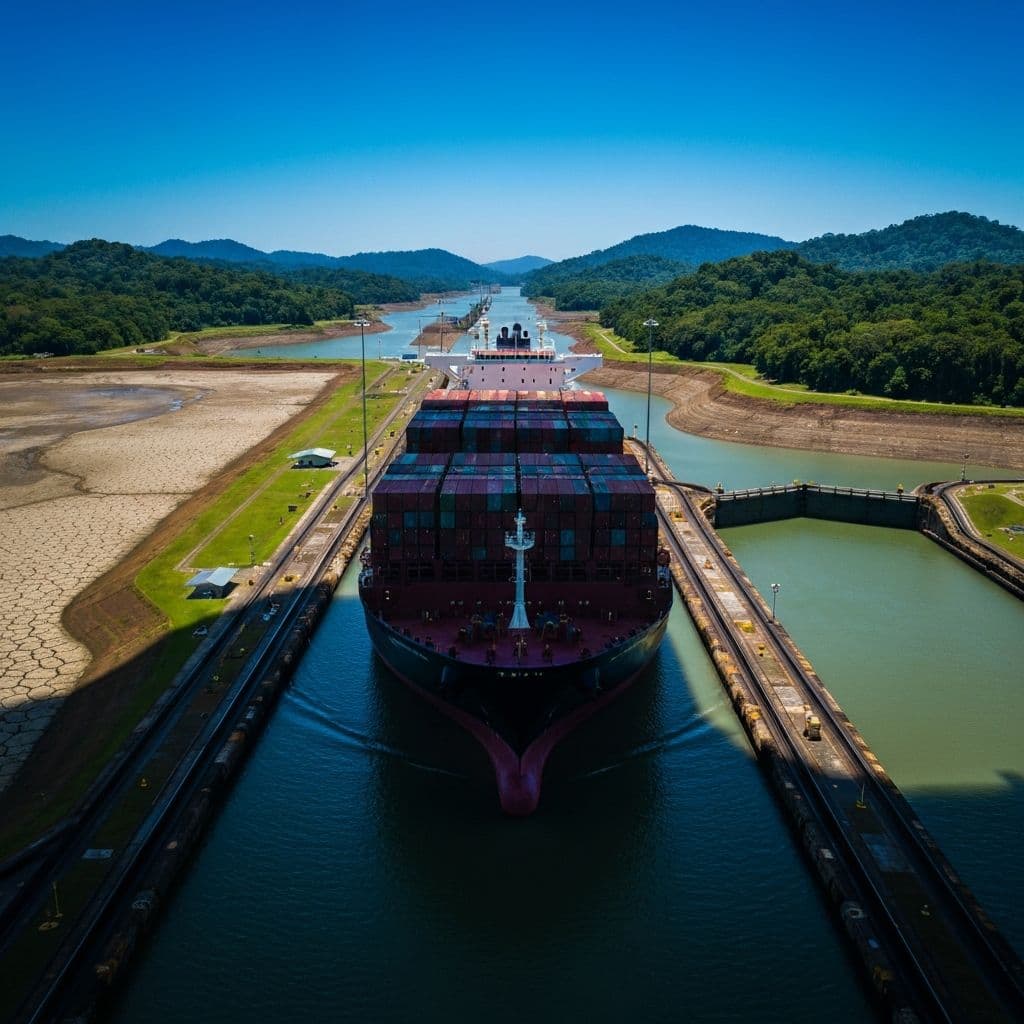
Panama Canal drought shipping news today: latest updates on water levels, transit restrictions, global trade impact, delays, and supply chain disruptions.
Panama Canal Drought Shipping News Today
The Panama Canal drought shipping news today continues to dominate global trade headlines as one of the world's most important maritime routes faces unprecedented water shortages. With Gatun Lake levels fluctuating and transit restrictions reshaping international logistics, shippers, exporters, and consumers are all feeling the ripple effects. This in-depth report breaks down the current state of the canal, the causes behind the drought, and what it means for global supply chains in 2026.
As climate patterns shift and El Niño conditions persist, the Panama Canal Authority (ACP) has been forced to adapt its operations, introducing daily transit caps, draft restrictions, and auction-based slot bookings. Understanding today's news is essential for anyone involved in shipping, trade, or global commerce.
Table of Contents
- Current Status of the Panama Canal
- What Caused the Panama Canal Drought?
- Impact on Global Shipping Today
- Industries Most Affected
- How Shipping Companies Are Responding
- Alternative Routes Being Used
- Long-Term Outlook for the Canal
- Practical Tips for Shippers
- FAQs
- Conclusion
Current Status of the Panama Canal
As of today, the Panama Canal is operating under restricted capacity. Daily vessel transits have been gradually increasing from the historic lows of 22 per day, but remain below the normal 36–38 transit benchmark.
Water Level Updates
- Gatun Lake levels remain below the 10-year average
- Alajuela Lake is showing slow recovery after seasonal rains
- Draft restrictions for Neopanamax vessels have been partially eased
Transit Slot Auctions
Shipping companies are paying premium pricessometimes millions of dollarsto secure priority transit slots, a trend that has continued into 2026.
What Caused the Panama Canal Drought?
The drought affecting the Panama Canal is the result of multiple overlapping factors.
El Niño Weather Patterns
El Niño has historically reduced rainfall across Central America, and the 2023–2024 cycle was among the strongest on record. The Panama Canal relies on freshwater from rainfall, not seawater, to operate its locks.
Climate Change
Long-term warming trends have altered precipitation patterns in the Panama Canal watershed, leading to:
- More intense but less frequent rainfall
- Higher evaporation rates from reservoirs
- Reduced dry-season water reserves
Rising Water Demand
Each Neopanamax transit uses approximately 50 million gallons of freshwater. With global trade increasing, demand on the canal's freshwater system has intensified.
Impact on Global Shipping Today
The drought has created one of the most significant shipping disruptions since the COVID-19 pandemic.
Longer Transit Times
Vessels waiting for transit have reported delays ranging from several days to more than three weeks during peak congestion.
Higher Freight Rates
Container rates on key trade lanesespecially Asia to U.S. East Coasthave surged due to:
- Increased fuel costs from rerouting
- Higher canal tolls and auction fees
- Reduced effective global shipping capacity
Supply Chain Disruptions
Retailers, manufacturers, and energy companies have all reported inventory planning challenges.
Industries Most Affected
Several industries depend heavily on the Panama Canal, and today's drought news has direct consequences for each.
Agriculture
- U.S. grain exporters to Asia face higher costs
- South American produce shipments are delayed
- Fertilizer shipments to the Americas face bottlenecks
Energy
- LNG carriers are among the hardest hit
- LPG tankers are rerouting around Cape Horn or via Suez
- Crude oil movements between the Atlantic and Pacific are disrupted
Retail and Consumer Goods
Major retailers report:
- Delayed holiday inventory restocking
- Higher landed costs for imported goods
- Pressure to shift to air freight for urgent items
How Shipping Companies Are Responding
Global carriers are implementing creative solutions to mitigate the impact.
Route Diversification
Many lines are splitting services:
- Some vessels transit the canal
- Others reroute via Suez or around Africa
- Smaller feeder networks are expanding in both oceans
Cargo Offloading and Rail Transport
A growing number of shippers use the Panama Canal Railway to transport containers across the isthmus while vessels transit empty or with reduced load.
Premium Slot Bookings
Carriers increasingly participate in ACP's slot auctions, with record bids reported in recent months.
Alternative Routes Being Used
When the Panama Canal faces restrictions, shippers turn to alternativeseach with trade-offs.
The Suez Canal
While historically a strong alternative, the Suez Canal has faced its own disruptions from regional security concerns, limiting its reliability.
The Cape of Good Hope
Routing around Africa adds:
- 7–14 days to voyages
- Significant fuel consumption
- Higher emissions
The Strait of Magellan
For South American trade, some operators are using this southern route despite rough seas and longer distances.
Long-Term Outlook for the Canal
The Panama Canal Authority has announced several long-term initiatives.
The Rio Indio Reservoir Project
This multi-billion-dollar project aims to create additional freshwater storage to stabilize canal operations for decades. Key benefits include:
- Additional water supply for locks
- Drinking water for Panamanian communities
- Reduced dependence on Gatun Lake
Water Recycling Systems
The Neopanamax locks already recycle about 60% of water per transit. Future upgrades may increase this further.
Improved Forecasting
The ACP is partnering with meteorological agencies to better predict rainfall patterns and plan transit schedules.
Practical Tips for Shippers
If you rely on the Panama Canal for your operations, consider these strategies.
- Book early Reserve slots well in advance to avoid auction premiums
- Diversify routes Don't rely on a single shipping lane
- Monitor ACP updates Water levels and restrictions change frequently
- Communicate with carriers Understand surcharges and contingency plans
- Build buffer inventory Account for potential delays in your supply chain
- Consider nearshoring Reduce long-distance dependency where possible
FAQs
Is the Panama Canal still open today?
Yes, the Panama Canal remains open, but it operates under transit restrictions due to drought conditions. Daily vessel limits and draft restrictions may apply.
How long will the Panama Canal drought last?
Recovery depends on rainfall and watershed conditions. Partial recovery has begun, but full normalization may take additional rainy seasons and infrastructure upgrades.
Does the Panama Canal use freshwater or seawater?
The Panama Canal uses freshwater from Gatun Lake and Alajuela Lake to operate its locks, which is why droughts impact operations significantly.
How much does a Panama Canal slot auction cost?
Prices vary, but premium auction slots have reportedly sold for several million dollars during peak congestion periods.
Which route is fasterPanama Canal or Suez Canal?
It depends on origin and destination. The Panama Canal is typically faster for Asia–U.S. East Coast trade, while Suez is faster for Asia–Europe routes.
Conclusion
The Panama Canal drought shipping news today reflects a complex blend of climate challenges, global trade pressures, and strategic adaptation. While the canal remains a vital artery of world commerce, the ongoing drought has exposed vulnerabilities in global supply chains and pushed the industry to innovate. Shippers must stay informed, plan flexibly, and embrace diversified routing strategies to navigate this evolving landscape. As infrastructure projects advance and weather patterns shift, the Panama Canal's future will remain one of the most closely watched stories in international logistics.