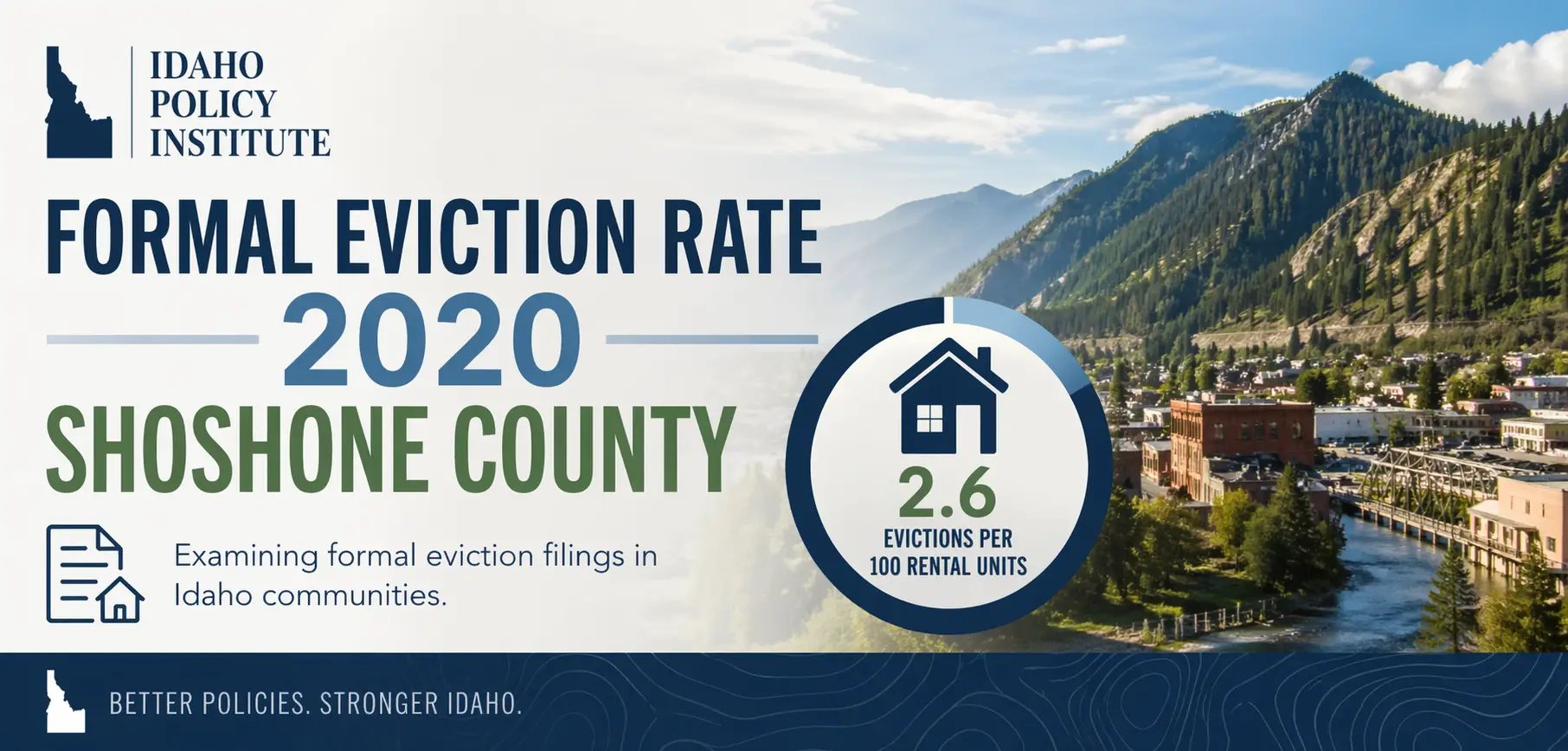
Explore Idaho Policy Institute's formal eviction rate 2020 Shoshone County data, trends, housing insights, and what these statistics mean for residents.
Idaho Policy Institute Formal Eviction Rate 2020 Shoshone County: Data and Insights
The Idaho Policy Institute formal eviction rate 2020 Shoshone County report is one of the most valuable resources for understanding housing stability in northern Idaho. Eviction data sheds light on affordability, economic vulnerability, legal access, and community well-being. For Shoshone County, a rural region in the Idaho Panhandle, 2020 was a particularly meaningful year given the economic impact of the COVID-19 pandemic and the introduction of emergency eviction moratoriums.
In this in-depth article, we'll explore what the Idaho Policy Institute's findings mean, how formal eviction rates are calculated, what makes Shoshone County unique, and what lessons policymakers and residents can take away.
Table of Contents
- What is the Idaho Policy Institute?
- Understanding Formal Eviction Rates
- Shoshone County at a Glance
- 2020: A Unique Year for Housing
- Key Findings on the 2020 Formal Eviction Rate
- Factors Influencing Eviction Rates
- Comparing Shoshone County to Other Idaho Counties
- Policy Implications
- Practical Steps for Renters and Landlords
- FAQs
- Conclusion
What is the Idaho Policy Institute? {#what-is-ipi}
The Idaho Policy Institute (IPI) is a nonpartisan research center based at Boise State University. It conducts applied research on issues important to Idaho, including housing, economic development, health, and public administration. IPI's data-driven approach makes it a trusted source for state and local policy decisions.
Why IPI's Work Matters
- Provides reliable, peer-reviewed data
- Informs legislators and county officials
- Helps nonprofits design housing programs
- Empowers citizens with transparent information
Understanding Formal Eviction Rates {#understanding-eviction-rates}
A formal eviction occurs when a landlord files a legal eviction action (unlawful detainer) through the court system. The eviction rate is typically calculated as:
Formal Eviction Rate = (Number of Formal Eviction Filings / Number of Renter Households) × 100
Formal vs Informal Evictions
- Formal evictions go through the courts and appear in public records.
- Informal evictions happen without court filings tenants leave due to pressure, rent hikes, or threats.
Formal eviction data therefore undercounts the true level of housing displacement but remains a critical, measurable indicator.
Shoshone County at a Glance {#shoshone-at-a-glance}
Shoshone County is located in the Idaho Panhandle, known for its mining history, forested terrain, and small, tight-knit communities.
Key County Characteristics
- Population: Roughly 12,500
- Major towns: Kellogg, Wallace, Pinehurst, Osburn
- Economy: Mining, tourism, small businesses, public services
- Median household income: Below the Idaho state average
- Renter-occupied housing: A meaningful share of the housing stock
These characteristics shape the housing landscape in ways unique from urban counties like Ada or Canyon.
2020: A Unique Year for Housing {#2020-a-unique-year}
2020 was unlike any other year in recent memory due to the COVID-19 pandemic. Across the U.S., housing markets were disrupted by:
- Job losses, especially in service sectors
- Federal and state eviction moratoriums
- Emergency rental assistance programs
- Court delays and backlogs
As a result, formal eviction filings dropped significantly in many places, even though underlying housing instability often increased. This is essential context when interpreting the Idaho Policy Institute formal eviction rate 2020 Shoshone County figures.
Key Findings on the 2020 Formal Eviction Rate {#key-findings}
Based on IPI's research into eviction filings across Idaho counties, Shoshone County's 2020 formal eviction rate reflected several broader trends.
Observations
- Lower-than-expected formal filings due to moratoriums.
- Continued vulnerability among low-income renters.
- Geographic concentration of filings in specific towns.
- Delayed filings that surfaced in later months of 2020 or 2021.
What the Numbers Tell Us
- The rate of formal evictions was measurable but dampened by policy interventions.
- Rural housing instability persisted in informal ways.
- Data gaps highlight the need for more robust reporting.
Formal eviction data is a window not a mirror into housing instability.
Factors Influencing Eviction Rates {#factors}
Several factors influenced the 2020 formal eviction rate in Shoshone County.
Economic Factors
- Unemployment spikes in tourism and hospitality
- Mining and service sector volatility
- Limited high-wage job opportunities
Housing Market Factors
- Limited rental stock
- Aging housing infrastructure
- Rising rent pressures even in rural markets
Legal and Policy Factors
- CDC eviction moratorium (September 2020)
- State-level emergency orders
- Federal rental assistance rollouts
Community Factors
- Informal landlord-tenant agreements common in small towns
- Strong neighbor networks that delay formal eviction
- Limited access to legal aid
Comparing Shoshone County to Other Idaho Counties {#comparison}
Idaho Policy Institute research often compares counties to contextualize findings.
Rural vs Urban
- Urban counties (Ada, Canyon, Kootenai) often have higher raw numbers of eviction filings due to larger rental populations.
- Rural counties like Shoshone may show different patterns, with fewer formal filings but similar underlying stress.
Regional Panhandle Comparisons
Shoshone County sits alongside Kootenai and Benewah counties, each with their own housing markets. Shoshone's older housing stock and smaller rental market result in unique dynamics.
Policy Implications {#policy-implications}
The Idaho Policy Institute formal eviction rate 2020 Shoshone County findings carry several policy implications.
1. Need for Better Data Collection
Expanding formal eviction reporting and capturing informal evictions would improve policy accuracy.
2. Rental Assistance Expansion
Providing emergency rental aid before eviction filings begin reduces displacement.
3. Legal Aid Access
Rural renters often lack access to attorneys, making legal clinics and tenant hotlines crucial.
4. Housing Supply Investment
Investing in affordable housing in rural counties helps stabilize communities.
5. Landlord Engagement
Supporting small landlords with mediation programs reduces court filings.
Practical Steps for Renters and Landlords {#practical-steps}
If you are a renter or landlord in Shoshone County, here are some practical steps inspired by the 2020 data.
For Renters
- Keep communication with landlords open and in writing
- Apply early for rental assistance programs
- Contact Idaho Legal Aid Services for free legal help
- Keep records of payments and notices
- Understand your rights under Idaho landlord-tenant law
For Landlords
- Consider mediation before filing in court
- Offer payment plans when possible
- Stay informed about state and federal rules
- Document communications carefully
- Engage with local housing organizations
FAQs
1. What is a formal eviction rate?
It's the percentage of renter households that have a court eviction filing in a given year.
2. Why was 2020 unusual for eviction data?
Pandemic-era moratoriums and rental assistance programs significantly reduced formal filings nationwide.
3. Does a low formal eviction rate mean housing stability was strong?
Not necessarily. Informal evictions and economic stress were often hidden behind low filing numbers.
4. Where can I find IPI's reports?
The Idaho Policy Institute publishes reports on its official Boise State University website.
5. How can Shoshone County improve its housing outlook?
Through expanded rental assistance, better data, legal aid access, and affordable housing investment.
Conclusion
The Idaho Policy Institute formal eviction rate 2020 Shoshone County data is more than a statistic it's a reflection of how rural communities experience housing instability during extraordinary times. Although moratoriums and emergency aid suppressed formal eviction numbers in 2020, the underlying vulnerabilities remained. Understanding this data helps policymakers, nonprofits, landlords, and renters collaborate to build a more stable housing future for Shoshone County and all of Idaho.