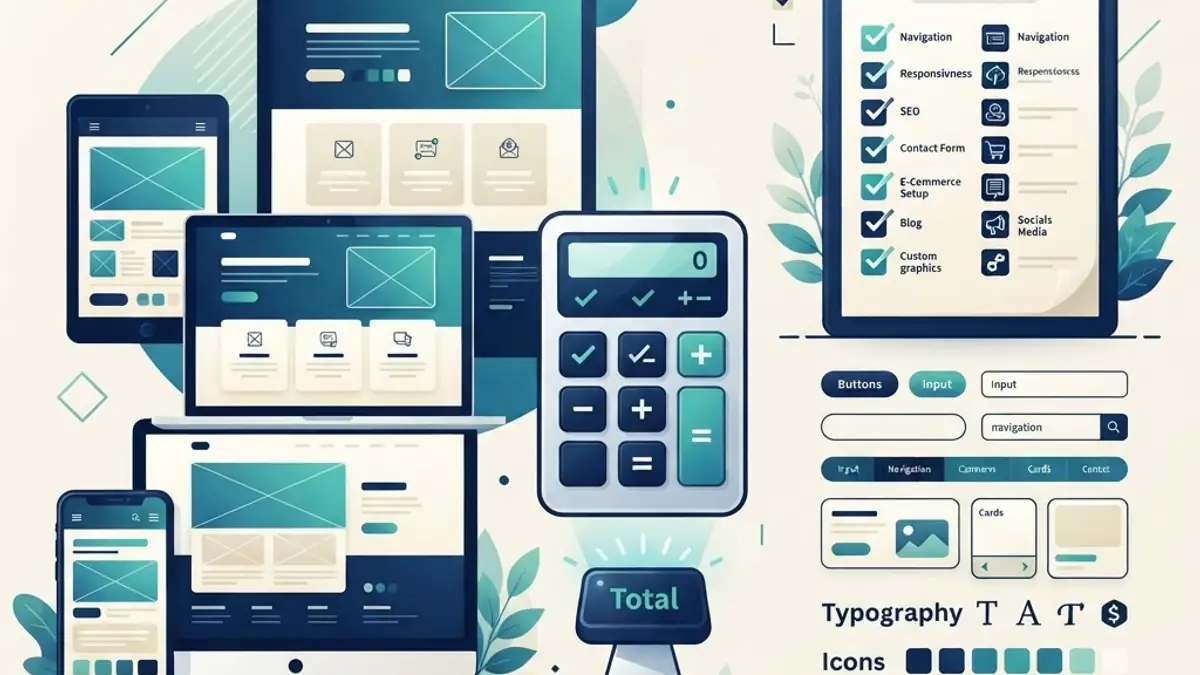
Understand web page design costs in 2026, from landing pages to reusable templates, plus the factors, deliverables, and questions that shape an accurate quote.
Last updated: July 19, 2026
How Much Does Web Page Design Cost
Introduction
How much does web page design cost? A single page can mean a short contact template, a research-heavy sales page, or a complex dashboard. In 2026, design-only pricing might range from several hundred dollars for a simple page within an existing system to several thousand for a custom, conversion-focused page. Design plus production development costs more.
This guide clarifies what “one page” includes, why page pricing varies, and how to request comparable quotes.
Table of Contents
- Design-Only Planning Ranges
- Design Versus a Live Page
- Why One Page Can Be Complex
- Landing Pages, Home Pages, and Product Pages
- What a Good Quote Includes
- How to Lower Cost Without Lowering Quality
- Measuring the Return
- Frequently Asked Questions
- Conclusion and Next Step
Design-Only Planning Ranges
A straightforward page using an established brand and component library may cost about $300–$1,500. A custom marketing page with discovery, wireframes, desktop and mobile design, and revisions may range around $1,500–$5,000. Research-intensive landing pages or product interfaces can exceed that.
These are broad US-market planning ranges, not fixed rates. Seniority, geography, evidence requirements, and rights affect price.
Design Versus a Live Page
Design deliverables may include wireframes, mockups, prototypes, component notes, and assets. A live page additionally needs semantic code, responsive behavior, CMS integration, forms, analytics, performance work, browser testing, accessibility checks, and deployment.
Ask whether the quote includes {FE} and any required {BE}. Otherwise, a low “page design” quote may cover only a visual file.
Why One Page Can Be Complex
Length, number of sections, responsive states, custom illustration, interactions, forms, calculators, personalization, ecommerce, and multiple audiences all add work. A landing page also needs message strategy and conversion evidence.
A reusable template can be more valuable than one fixed page because the team can publish future pages consistently. That system work raises the first cost but may lower total cost.
Landing Pages, Home Pages, and Product Pages
A home page must orient several audiences and routes, so it typically requires broader strategy. A campaign landing page narrows attention to one offer and depends heavily on copy and measurement. A product page may need variants, reviews, inventory, shipping information, and structured data.
Comparing all three by visual length ignores their different jobs.
What a Good Quote Includes
Look for discovery, content assumptions, wireframes, visual direction, responsive breakpoints, states, revision rounds, accessibility, prototype needs, source files, implementation support, timeline, and usage rights. For development, add CMS, analytics, form behavior, testing, launch, and warranty.
Define who supplies copy and images. Professional {CONTENT} and {GRAPHIC} support may improve quality but should appear transparently in the budget.
How to Lower Cost Without Lowering Quality
Use an existing design system, limit unique interactions, prepare approved content, consolidate feedback, and prioritize one conversion goal. Reusing accessible components is more effective than removing essential testing.
Avoid cutting mobile design, accessibility, or QA. Those savings often create expensive failures later.
Measuring the Return
For a landing page, track qualified conversion rate, cost per lead, completion errors, and lead quality. For informational pages, consider task success, assisted conversions, search visibility, and support reduction.
Run measured iterations instead of judging only by preference. Design earns its value by helping users understand and act.
A Practical Decision Framework
Start by writing one sentence for the business outcome, one for the primary audience, and one for the action that audience should complete. Then list the evidence available today: analytics, customer interviews, sales notes, search data, support questions, technical reports, and existing content. This simple exercise prevents how much does web page design cost decisions from becoming a contest of personal taste.
Next, separate requirements into essential, valuable, and optional groups. Essential items protect the core journey, accessibility, security, and legal obligations. Valuable items improve differentiation or efficiency. Optional ideas should not delay launch unless evidence shows they are important. Assign an owner and acceptance test to every essential requirement.
Finally, compare options using the same criteria. Score strategic fit, quality of evidence, usability, technical sustainability, total cost, delivery risk, and post-launch support. Record why each score was given. The written rationale makes trade-offs visible and gives future stakeholders context.
Practical Example
Imagine a service business whose website receives reasonable traffic but few qualified inquiries. The team initially asks for a more modern home page. Research shows a different problem: visitors cannot tell which service fits them, case studies do not explain outcomes, and the form requests sensitive details before trust has been established. A purely visual refresh would leave those barriers intact.
A better plan clarifies service categories, adds audience-specific examples, moves credible proof beside key claims, shortens the initial form, and explains what happens after submission. Development then ensures the journey is fast, accessible, measurable, and reliable on mobile. The team records a baseline for qualified inquiries and form abandonment, launches the changes, and reviews both analytics and lead quality after an appropriate sales cycle.
This example illustrates an important principle: the most valuable recommendation is often not the most visually dramatic. Good work identifies the constraint that prevents progress and directs budget toward it.
Common Mistakes to Avoid
Choosing From Appearance Alone
A portfolio can demonstrate craft, but it does not reveal discovery quality, accessibility, maintainability, or business impact. Ask for reasoning and live examples.
Starting Before Content Is Understood
Layout and content shape one another. Delayed copy causes rework, weak hierarchy, and launch compromises. Audit or draft priority content early.
Treating Mobile as a Smaller Desktop
Mobile users may have different context, attention, connectivity, and input constraints. Review complete tasks at realistic sizes and on physical devices.
Ignoring Ownership and Operations
Clarify domains, hosting, source files, licenses, accounts, updates, backups, and training. A launch without operational ownership creates avoidable risk.
Measuring Only Traffic
More visits do not automatically create more value. Track qualified outcomes, task success, lead quality, customer understanding, and operational effects.
Implementation Checklist
- Define the audience, problem, primary action, and measurable business outcome.
- Gather available customer, analytics, search, sales, support, and technical evidence.
- Confirm scope, assumptions, exclusions, decision-makers, and approval timing.
- Prepare or commission accurate content and obtain required rights and reviews.
- Review information architecture and wireframes before polishing visual details.
- Specify responsive behavior, accessibility expectations, privacy, and security.
- Test content, forms, analytics, integrations, performance, browsers, and devices.
- Document redirects, launch responsibilities, rollback, training, and ownership.
- Capture baselines before launch and schedule a post-launch review.
- Maintain the site and update recommendations as evidence changes.
How Current Google Guidance Applies
Google's people-first guidance does not require a special word count, a particular design trend, or constant publication. It rewards content created to help an intended audience, with a clear purpose and evidence of first-hand experience or genuine expertise where relevant. For this topic, that means answering the decision a reader actually faces, stating limitations, avoiding unsupported superlatives, and updating material when facts change.
E-E-A-T is a quality lens rather than a single technical score. Demonstrate experience through original examples and process detail; expertise through accurate explanations; authority through a coherent body of useful work and legitimate reputation; and trust through clear authorship, contact information, policies, sources where needed, secure delivery, and honest claims. Do not add keywords unnaturally. Use descriptive headings and internal links only when they help readers continue a relevant task.
Frequently Asked Questions
How much is a basic landing page?
Design-only work may start in the hundreds, while custom strategy, copy, design, and development commonly reach several thousand dollars.
Does page length determine cost?
Partly, but unique sections, research, interactions, content, and technical behavior matter more than raw length.
Is mobile design included?
It should be explicit. Responsive design requires deliberate decisions, not automatic shrinking.
How many revisions are normal?
Many scopes include two or three structured rounds. The exact number matters less than clear feedback and acceptance criteria.
Do I own the design files?
Ownership and licenses depend on the contract. Confirm source files, fonts, images, code, and transfer rights.
Can AI reduce page design cost?
AI can accelerate drafts and exploration, but expert review, original strategy, accessibility, accuracy, and QA remain necessary.
Conclusion and Next Step
How much does web page design cost decisions work best when they begin with goals, evidence, realistic scope, and clear ownership. Use the framework above to compare options, document assumptions, and protect long-term quality rather than choosing solely on appearance or price.
Ready to move from research to a practical plan? Explore professional website design and request a scope built around your audience, content, technology, accessibility, and measurable business outcomes.