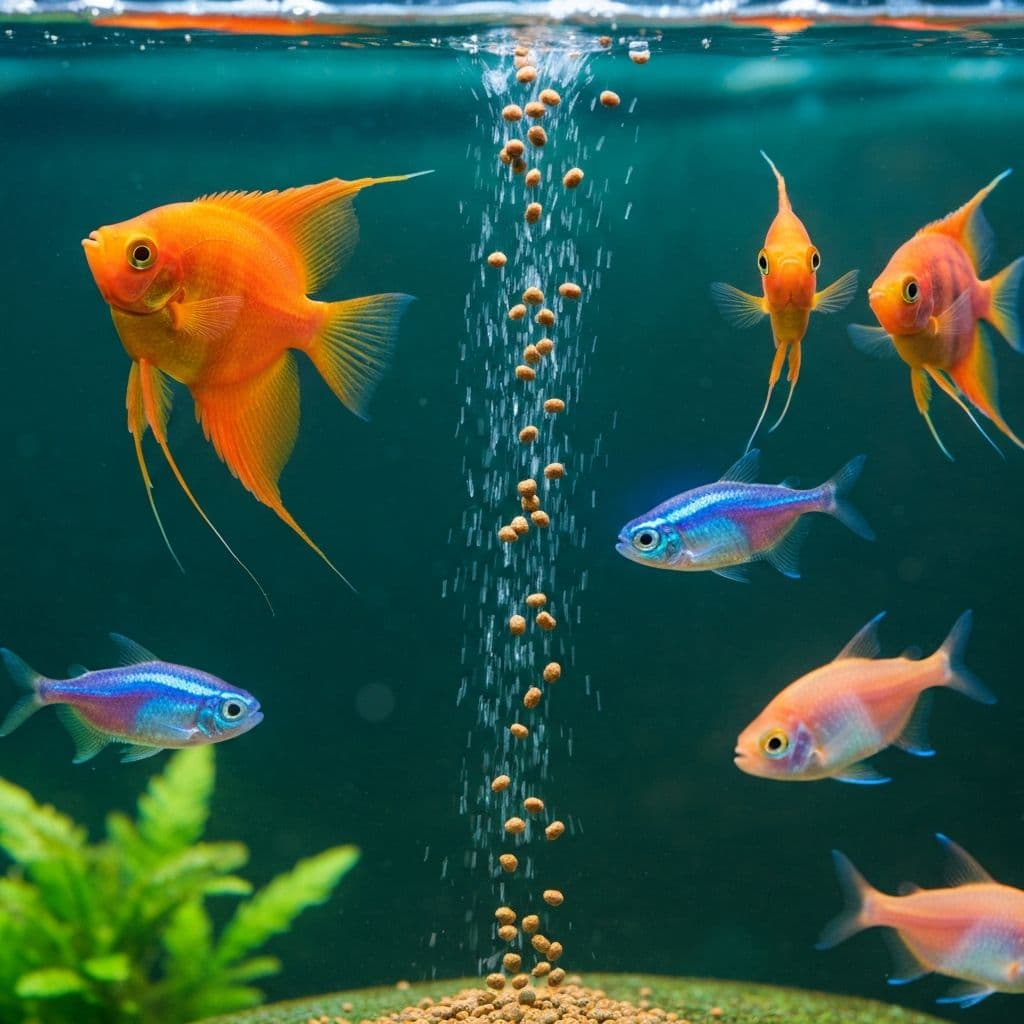
Complete guide to fish food types, nutrition requirements, feeding schedules, and best practices for aquarium fish of all species.
Fish Food: Complete Nutrition Guide for Healthy Aquarium Fish
Introduction
Proper fish food selection is fundamental to maintaining a thriving aquarium and ensuring your aquatic pets live long, healthy lives. Fish food comes in numerous varieties, each designed for specific fish species, sizes, and nutritional requirements. Understanding the differences between fish food types and learning how to feed your aquarium fish correctly can significantly impact their health, coloration, and longevity. This comprehensive guide covers everything you need to know about fish food, from flakes to pellets, frozen options to live foods, and species-specific dietary requirements.
Table of Contents
- Types of Fish Food
- Flake Fish Food
- Pellet Fish Food
- Frozen Fish Food
- Live Fish Food
- Species-Specific Fish Food
- Feeding Guidelines
- Nutritional Requirements
- Storage and Freshness
- FAQs
- Conclusion
Types of Fish Food {#types}
Understanding Fish Food Categories
Modern aquarium fish food falls into several distinct categories, each with unique advantages and disadvantages.
The Four Main Fish Food Types:
- Flakes: Traditional, widely available, good for community tanks
- Pellets: Nutrient-dense, less waste, various sizes available
- Frozen: Mimics natural diet, highly nutritious
- Live: Most natural option, stimulates hunting instincts
Each type of fish food serves different purposes and suits different aquarium setups and fish species.
Flake Fish Food {#flakes}
Advantages of Flake Fish Food
Flake fish food remains the most popular choice among aquarium hobbyists, and for good reason.
Benefits Include:
- Affordable and widely available
- Easy portion control
- Suitable for multiple species
- Long shelf life
- Quick consumption (no waste)
- Good nutritional variety
Quality Indicators for Fish Food Flakes
Not all flake fish food is created equal. Several factors distinguish premium options from budget brands.
What to Look For:
- Multiple color variations (indicates diverse ingredients)
- Natural ingredients without excessive fillers
- Reputable manufacturer with quality standards
- Appropriate protein content (40-50% for carnivorous fish)
- Inclusion of stabilized vitamins
- AAFCO certification when applicable
Disadvantages of Flake Fish Food
Despite their popularity, flake fish food has some limitations:
- Loses nutritional value quickly once open
- Can cloud water if overfed
- Messy dispersal
- Limited appeal to bottom-feeding fish
- Rapid degradation in high-moisture environment
Pellet Fish Food {#pellets}
Types of Fish Food Pellets
Modern fish food pellets come in various sizes and formulations designed for specific fish and water conditions.
Pellet Varieties:
Sinking Pellets:
- Designed for bottom feeders
- Reach the tank floor without dissolving
- Better for plecos, catfish, and loaches
- Reduced water cloudiness
Floating Pellets:
- For surface and mid-water feeders
- Good for bettas, cichlids, and goldfish
- Allow visual monitoring of consumption
- Natural observation of feeding behavior
Slow-Sinking Pellets:
- Hybrid option for community tanks
- Accommodate multiple feeding depths
- Excellent for mixed-species tanks
Advantages of Fish Food Pellets
Many experienced aquarists prefer pellet fish food for several compelling reasons:
Key Benefits:
- Concentrated Nutrition: More nutrients per piece than flakes
- Less Waste: Fish consume entire pellet, reducing tank pollution
- Portion Control: Easy to count and measure portions
- Storage: Better long-term stability than flakes
- Species Targeting: Pellets reach appropriate feeding depths
- Digestibility: Less likely to cause bloating in some species
Sizing Fish Food Pellets
Correct pellet size is crucial for optimal fish health and feeding efficiency.
Sizing Guidelines:
- Micro Pellets: For fry and small fish (1mm)
- Small Pellets: For small-medium fish (2-3mm)
- Medium Pellets: For medium fish (4-5mm)
- Large Pellets: For large fish and cichlids (6-10mm)
A general rule: pellet size should be roughly one-third the diameter of your fish's mouth.
Frozen Fish Food {#frozen}
Benefits of Frozen Fish Food
Frozen fish food offers nutritional advantages that appeal to serious aquarists.
Frozen Fish Food Advantages:
- Mimics natural diet composition
- Preserves nutrients better than dried foods
- Variety of options (bloodworms, brine shrimp, daphnia)
- Stimulates natural feeding behaviors
- Can improve coloration
- Excellent supplement to dry foods
Types of Frozen Fish Food
The frozen fish food market offers diverse options for different species.
Popular Frozen Fish Food Varieties:
Bloodworms:
- Highly nutritious larvae
- Excellent protein source
- Popular with carnivorous fish
- Should be occasional treats
- Can cause digestive upset if overfed
Brine Shrimp:
- Nutritionally complete
- Suitable for most fish
- Excellent for fry
- Higher in fat content
- Great for conditioning breeding fish
Daphnia:
- Natural crustacean
- Excellent fiber content
- Aids digestive health
- Good for varied diet
- Helps with egg production in females
Preparing Frozen Fish Food
Proper preparation of frozen fish food ensures maximum nutritional value and safety.
Correct Preparation Steps:
- Remove frozen cube from container
- Thaw in small cup of tank water
- Wait 5-10 minutes for complete thawing
- Dispense into tank
- Never add frozen food directly to tank
- Discard any uneaten portion after 10 minutes
Live Fish Food {#live}
Nutritional Superiority of Live Fish Food
Live fish food represents the most natural nutrition option for aquarium fish.
Live Fish Food Advantages:
- Complete nutrition with living bacteria
- Stimulates hunting instincts
- Increases mental enrichment
- Enhances natural coloration
- Supports breeding condition
- Variety mimics wild diet
Culturing Live Fish Food
Many aquarists culture their own live fish food to ensure quality and reduce costs.
Easy Live Fish Food Cultures:
Brine Shrimp:
- Eggs hatch in 24-48 hours
- Minimal equipment needed
- Inexpensive startup
- Harvest with simple sieves
- Store easily
Daphnia:
- Culture in dedicated containers
- Feed with yeast or spirulina
- Reproduce rapidly
- Excellent nutrition
- Sustainable long-term
Vinegar Eels:
- Culture in jars with vinegar and yeast
- Continuous reproduction
- Ideal for fry
- Minimal maintenance
- Completely free
Species-Specific Fish Food {#species}
Tropical Community Fish
Community aquariums require versatile fish food suitable for multiple species.
Best Fish Food for Community Tanks:
- High-quality flakes or pellets
- 40-45% protein content
- Balanced mineral and vitamin profile
- Multiple food types weekly
- Occasional frozen foods
Carnivorous Fish Food
Predatory fish require high-protein fish food to meet their dietary needs.
Carnivore Fish Food Requirements:
- Minimum 45-50% protein
- Meat-based ingredients as primary source
- Fatty acids for energy
- Frozen or live options preferred
- May refuse plant-based materials
Species Examples:
- Oscars
- Piranhas
- Pikes
- Lionfish
- Cichlids (many species)
Herbivorous Fish Food
Plant-eating fish require specialized fish food with vegetable components.
Herbivore Fish Food Specifications:
- Vegetable-based pellets
- Spirulina-enriched options
- Lower protein (25-35%)
- High fiber content
- Fresh vegetables as supplements
Herbivorous Fish Species:
- Plecos
- Snails
- Some cichlids
- Otocinclus
- Tangs
Feeding Guidelines {#feeding}
Proper Feeding Frequency
Overfeeding is the most common mistake in aquarium management. Proper fish food portions prevent water quality issues.
Feeding Schedules by Age:
Fry:
- 4-6 times daily
- Small portions
- High-protein foods
- Frequent water changes
Juveniles:
- 2-3 times daily
- Moderate portions
- Quality fish food
- Rapid growth support
Adults:
- Once daily (most species)
- Some species thrive with 2 feedings
- Species-dependent
- Maintenance portions
Senior Fish:
- Once daily
- Smaller portions
- Easier-to-digest foods
- More frequent monitoring
Calculating Proper Portions
A simple guideline helps determine appropriate fish food amounts:
The Two-Minute Rule:
- Feed only what fish consume in 2 minutes
- Uneaten food contaminates water
- Adjust based on consumption
- Account for all fish sizes in community tanks
- Bottom-feeders may eat more slowly
Nutritional Requirements {#nutrition}
Essential Nutrients in Fish Food
Quality fish food contains balanced nutrients supporting health.
Critical Nutritional Components:
Protein:
- Essential for growth and tissue repair
- Requirements vary by species
- 25-55% depending on fish type
Fats:
- Energy source
- Support cell function
- 5-15% in quality fish food
- Essential fatty acids important
Carbohydrates:
- Energy provision
- Should be minimal in fish diets
- 20% or less ideal
Vitamins:
- Immune system support
- Color enhancement
- Stabilized vitamins important
- Degradation occurs over time
Minerals:
- Bone and scale health
- Electrolyte balance
- Calcium and phosphorus ratios crucial
Storage and Freshness {#storage}
Proper Fish Food Storage
Correct storage preserves nutritional value and prevents degradation.
Storage Best Practices:
- Cool, Dark Location: Prevent vitamin oxidation
- Airtight Containers: Maintain freshness
- Away from Moisture: Prevent clumping and mold
- Original Packaging When Possible: Designed for protection
- Check Expiration Dates: Use oldest stock first
- Temperature Control: Avoid temperature fluctuations
Recognizing Expired Fish Food
When fish food loses nutritional value, quality declines significantly.
Signs of Poor Fish Food Quality:
- Discoloration or fading
- Unpleasant odors
- Clumping or clumps
- Mold growth (discard immediately)
- Dust accumulation
- Extended storage time
FAQs {#faqs}
Q: How long can fish survive without food?
A: Healthy adult fish can survive 2-3 weeks without food, though this is never recommended. Regular feeding maintains health and energy levels.
Q: Is it better to feed once or twice daily?
A: Most adult fish thrive on once-daily feeding. Young fish benefit from multiple daily feedings, while some species prefer twice-daily portions.
Q: Can fish eat human food?
A: Some human foods are safe (cooked vegetables, boiled eggs) in moderation, but quality fish food is always preferable and more nutritionally complete.
Q: What's the best fish food brand?
A: Reputable brands with quality standards and real ingredients are preferable. Examples include Tetra, Omega One, and New Life Spectrum, though personal preference and fish species should guide selection.
Q: How often should I change fish food varieties?
A: Rotating fish food types weekly provides nutritional variety and prevents dietary monotony while maintaining health.
Conclusion
Proper fish food selection and feeding practices form the foundation of successful aquarium keeping. By understanding the different types of fish food available, species-specific requirements, and appropriate feeding schedules, you create an environment where your aquatic pets thrive. Quality fish food, proper storage, and careful portion control prevent water quality issues while ensuring optimal nutrition. Remember that each fish species has unique requirements, so research your specific fish before settling on a fish food choice. Whether you prefer convenient flakes and pellets or embrace the nutritional benefits of frozen and live foods, consistency and variety will serve your fish well. Implement these fish food guidelines today and watch your aquarium transform into a thriving ecosystem where your fish display vibrant colors, active behavior, and long lifespans.